Food For Your Brain

Topic

GEO

Generative engine optimisation: being cited by AI answers rather than ranked by search results.

71 marks · first on 27 August 2026 · latest on 3 September 2026

Often filed alongside

searchenginejournal.com

The Technical Signals AI Search Uses That Most SEOs Still Aren't Optimizing

An audit of 50 major websites surfaces technical prerequisites for AI citation eligibility that go beyond the usual on-page checklist, structural signals most teams aren't yet checking. It's evidence-based rather than speculative, which is rarer than it should be in GEO coverage. Good to skim for a technical gap check even if the broader citation strategy is already in place.
searchengineland.com

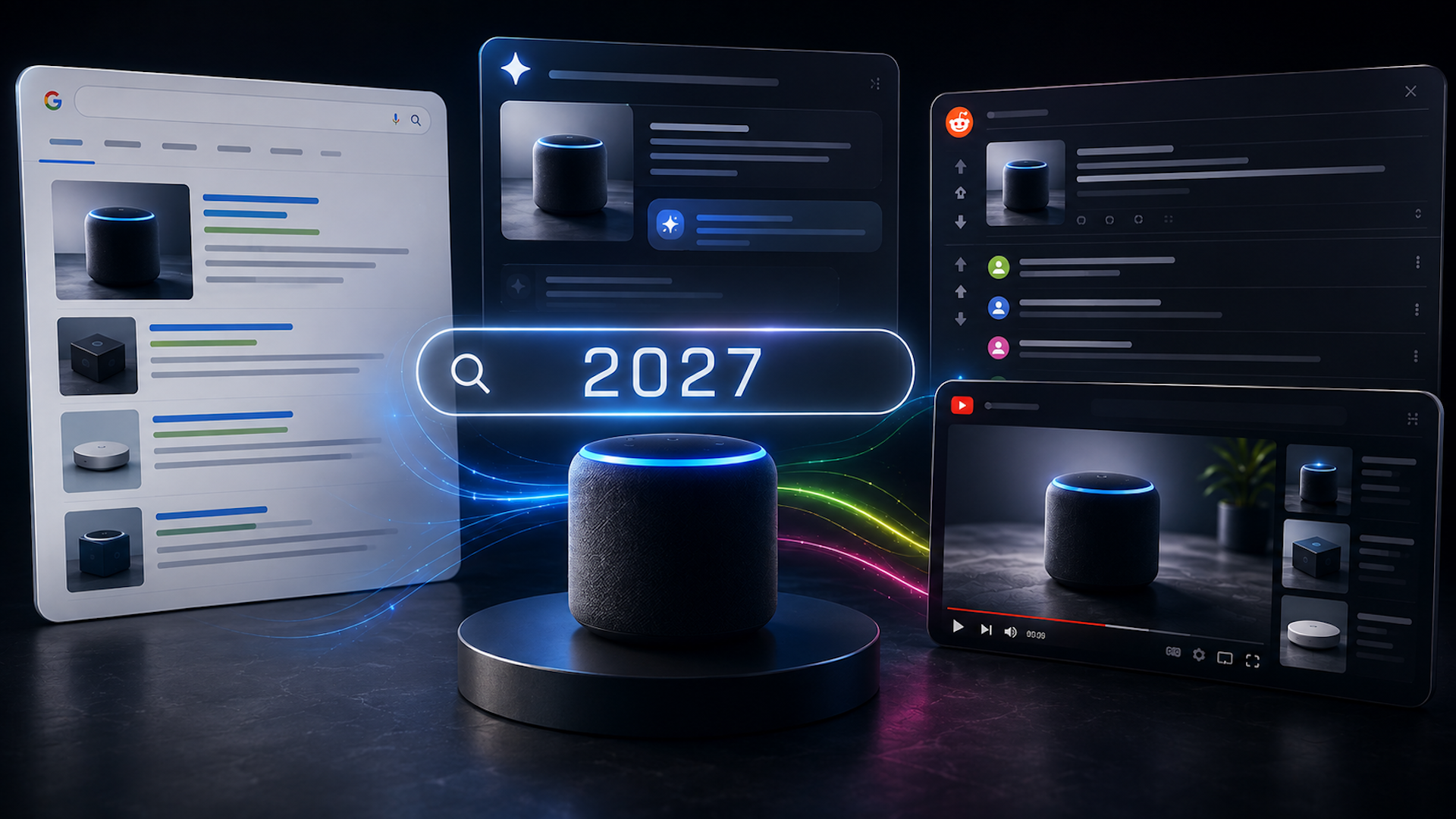
Evolving SEO for 2027: What still needs to change

The argument here is that SEO strategy needs to expand past Google rankings entirely, tracking AI citation sources, community platform visibility, and where models actually recommend brands, not just SERP position. It's a forward-looking framing rather than a tactics list, useful for justifying broader measurement scope to stakeholders still fixated on rankings. The hard part remains that most teams don't yet have reliable tooling to track citation share across AI answer engines.

searchenginejournal.com

Entities Are The Foundation Of Modern SEO

The piece's framing, that GEO is just entity SEO with a new name, argues clear entity definition of who and what a brand is, consistently across the web, is what actually earns AI citations, not new tactics. That's a useful corrective against treating GEO as a wholly separate discipline requiring new tooling. Worth auditing how consistently your brand's entity data across Wikipedia, Wikidata and schema markup is actually structured before chasing citation hacks.

searchengineland.com

Google Search Console AI performance reports and generative AI control roll out globally

Search Console now reports impressions inside AI features globally and lets sites opt out of generative surfaces. For the first time there is first-party measurement of AI-driven visibility rather than guesswork. Wire these reports into reporting now so you can show whether AI answers help or cannibalise traffic.

searchengineland.com

Calls and clicks keep falling as Google Maps becomes the destination

Google Maps direction requests rose over 31% year over year while calls and clicks to businesses fell nearly 16%, showing customers increasingly complete their journey inside Maps itself. It's a concrete data point for the broader zero-click trend eating into referred traffic, beyond just AI search. Worth factoring into any local-visibility or GEO reporting that still leans on click-through as the main success metric.

searchengineland.com

5 steps to building Reddit authority for Google and ChatGPT visibility

A five-step framework for building Reddit authority shows real results: one case study reached over 18% visibility across monitored ChatGPT prompts within five months. It's concrete evidence that Reddit presence is becoming a genuine lever for AI-search visibility, not just an SEO theory. Useful proof point when justifying investment in Reddit as part of a GEO strategy.

searchenginejournal.com

Claude Searches Web Differently From Claude Code, Data Shows

New data shows Claude and Claude Code query the web at different rates, cite different brands, and land on different types of pages than each other. It's an early look at how much AI-agent behaviour can vary even within the same vendor's tools, complicating any single GEO playbook. Good reminder that AI-visibility optimisation needs to account for agent-specific behaviour, not just one AI search engine at a time.

searchenginejournal.com

Facebook Groups Are Google's No. 2 Forum Source

Public Facebook Group posts now show up in 38% of Google's discussion-style results, second only to Reddit, meaning community content most brands treat as semi-private is actually feeding search and AI visibility. It's a reminder that earned presence in owned or semi-owned communities can double as a citation source, not just an engagement channel. Worth an audit of which public groups already surface your brand's name.

searchengineland.com

Google is dynamically expanding AI Overviews for some queries

Google is dynamically expanding AI Overviews into fuller, AI Mode-style responses for some queries, pushing traditional organic and paid results further down the page. This directly shrinks visible real estate for earned and paid placements on affected queries, adding urgency to GEO work that earns citation inside the AI answer itself. Worth checking which of your brand's query categories are getting the expanded treatment.

searchenginejournal.com

AI Search Didn't Remove Cognitive Load, It Moved It

The argument here is that AI search answers faster but shifts the real cognitive work to verifying and contextualizing those answers, rather than eliminating it. That's a useful frame for anyone measuring GEO success purely on citation counts: getting cited is not the same as being trusted or acted on. Worth factoring into how GEO performance gets reported internally, beyond simple visibility metrics.

searchengineland.com

Your images have a new job in AI search

AI search systems are increasingly using images as retrieval anchors, matching on the image first and pulling surrounding text for the citation, per patent language from Google. That flips a lot of standard SEO thinking, where images were an accessibility or engagement afterthought rather than a citation trigger. Worth auditing whether owned image assets are structured in a way that supports this kind of AI retrieval.

searchengineland.com

Reddit is the keyword research tool you're probably not using

Reddit now shows up in more than 15 million AI Overview queries with a 46% citation rate, making it a genuine research surface for understanding what language AI systems pull into answers. For anyone doing GEO work, this reframes Reddit from a community platform into a citation-source discovery tool worth mining directly. Concrete, measurable evidence of AI citation behavior rather than a theoretical GEO tactic.

searchenginejournal.com

107 million AI answers analysed: community content is half of every citation set

Across 107 million AI answers on four engines, community and user-generated content sits at almost exactly half of citations in each sector studied: 51% IT services, 50% consumer goods, 50% communication. Editorial and reference take 47%, 4% and 40%; brand-owned pages take 2%, 46% and 10%. Reddit is a top three source in all three. Google AI Overviews leans on YouTube and Reddit, ChatGPT on Wikipedia and trade media. Note the limit: only three sectors, so the figures are directional elsewhere.

searchenginejournal.com

AI tools recommend brands, then cite somebody else

A Shero Commerce study of 1,851 sources across 60 product categories on Google AI Mode, ChatGPT and Perplexity found only 2.8% of cited sources were brand-owned pages. Where a tool named a brand as a recommendation (159 instances), the brand's own page was cited just 31% of the time, while third-party editorial accounted for 59% of citations. Being recommended and being cited are two different outcomes, and brands mostly get the first.

tubefilter.com

Answer engine optimisation reaches creator marketers

Creator agency Influencer has partnered with Profound to help brands get cited in AI chatbot answers, reporting a shift in preferred source from Reddit toward YouTube. The creator industry is starting to sell AI citation as a deliverable, which means it arrives as an agency pitch before it exists as an internal capability. Worth noting the tension: large-sample studies this week measure Reddit and editorial as dominant, and this claim comes from a vendor selling the service.

searchengineland.com

Google Confirms Deploying 'Goto' URL Redirects to Search Results Links

Google is routing search-result clicks through goto-style redirect URLs, explicitly to make scraping by third-party tools, trackers and AI engines harder. This directly threatens the referral and citation tracking that GEO and social-listening tooling depends on. Expect measurement vendors to scramble for workarounds, and treat any AI-citation dashboard numbers with extra caution going forward.

searchengineland.com

Google adds link carousels for developing topics in AI Mode

Google has begun showing link carousels for developing topics inside AI Mode, framed as making it easier to reach the original coverage. The same reporting notes overall click volume remains below pre-AI search levels despite the addition. Being cited and being clicked are now two separate outcomes, and the first is holding up considerably better than the second. The measurement consequence is to track citations rather than referral traffic.

digiday.com

The post-traffic era of the open web is taking shape

Human traffic is declining as AI crawlers consume a growing share of publisher content, pushing publishers away from scale-driven models toward brand building and audience diversification. The open web is splitting into two audiences, human visitors and machine readers. If publishers stop chasing traffic, a pitch built on traffic potential loses its leverage and a pitch built on access and originality gains it. That changes what earns coverage, not just how it is counted.

Follow this the easy way.

The daily brief covers this topic and the four others, in one email each morning.

One email each morning, around 07:00 CET. Unsubscribe in one click. Your address is never sold, never shared.