Food For Your Brain

Topic

Measurement

What gets counted, what gets ignored, and who benefits from the difference.

53 marks · first on 20 August 2026 · latest on 2 September 2026

Often filed alongside

searchengineland.com

Google Search Console AI performance reports and generative AI control roll out globally

Search Console now reports impressions inside AI features globally and lets sites opt out of generative surfaces. For the first time there is first-party measurement of AI-driven visibility rather than guesswork. Wire these reports into reporting now so you can show whether AI answers help or cannibalise traffic.

searchengineland.com

Calls and clicks keep falling as Google Maps becomes the destination

Google Maps direction requests rose over 31% year over year while calls and clicks to businesses fell nearly 16%, showing customers increasingly complete their journey inside Maps itself. It's a concrete data point for the broader zero-click trend eating into referred traffic, beyond just AI search. Worth factoring into any local-visibility or GEO reporting that still leans on click-through as the main success metric.

socialmediatoday.com

Snapchat Expands Unified Attribution to All Advertisers

Snapchat is rolling out its unified attribution tool to all advertisers globally, aiming to give a clearer, deduplicated view of ad performance across the funnel. It closes a measurement gap that made Snap's numbers harder to reconcile against other platforms. Relevant for anyone justifying Snapchat spend against multi-touch attribution models.

searchenginejournal.com

Facebook Groups Are Google's No. 2 Forum Source

Public Facebook Group posts now show up in 38% of Google's discussion-style results, second only to Reddit, meaning community content most brands treat as semi-private is actually feeding search and AI visibility. It's a reminder that earned presence in owned or semi-owned communities can double as a citation source, not just an engagement channel. Worth an audit of which public groups already surface your brand's name.

searchengineland.com

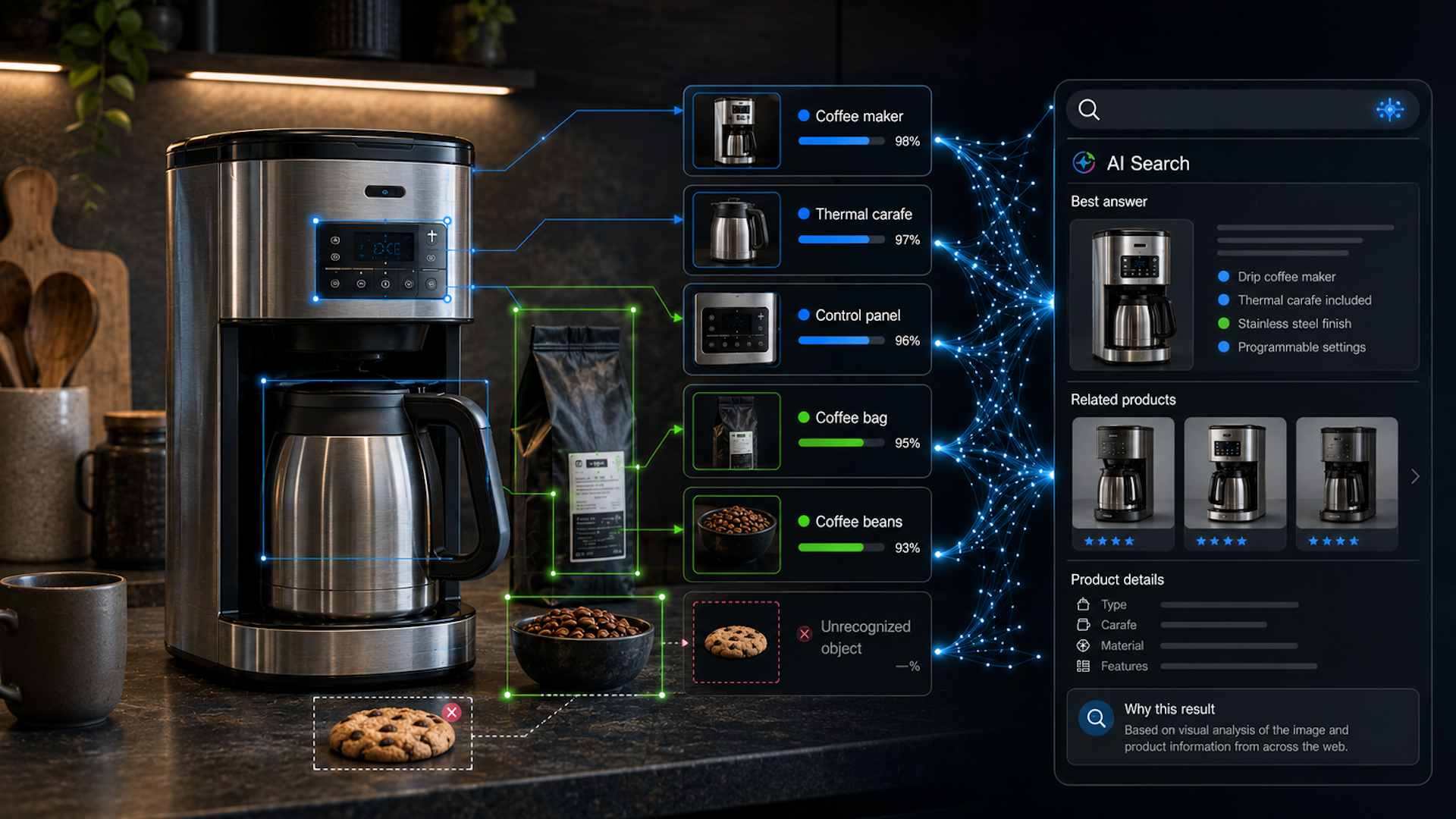
Your images have a new job in AI search

AI search systems are increasingly using images as retrieval anchors, matching on the image first and pulling surrounding text for the citation, per patent language from Google. That flips a lot of standard SEO thinking, where images were an accessibility or engagement afterthought rather than a citation trigger. Worth auditing whether owned image assets are structured in a way that supports this kind of AI retrieval.

digiday.com

The creator industry admits fee pricing is out of control, and cannot agree on a fix

Half of marketers misprice creator fees and 40% believe they overpaid, yet no pricing standard has emerged. Benchmarking tools are multiplying while the industry stays divided on what a standard would even look like. The useful reframe: this is a transparency problem, not an inflation problem. Without an internal price reference, every negotiation restarts from zero and budgets are defensible only by anecdote.

adweek.com

Do not let retail media tell you it is brand building

The argument is that retail media is genuinely valuable as a performance channel but should not be allowed to reclassify itself as brand building and pull budget from work that actually does that job. The category-drift problem is familiar: a channel that measures well starts claiming outcomes it does not produce. Worth keeping in mind whenever a channel's own measurement is the proof of its own strategic value.

searchengineland.com

Google Confirms Deploying 'Goto' URL Redirects to Search Results Links

Google is routing search-result clicks through goto-style redirect URLs, explicitly to make scraping by third-party tools, trackers and AI engines harder. This directly threatens the referral and citation tracking that GEO and social-listening tooling depends on. Expect measurement vendors to scramble for workarounds, and treat any AI-citation dashboard numbers with extra caution going forward.

techcrunch.com

Radar makes podcasts searchable, and usable by AI agents

Particle's Radar transcribes and analyses more than 130,000 podcasts and exposes the result through an API and an MCP integration, so podcast content becomes retrievable by both human search and AI agents. Spoken content has been effectively invisible to the systems that now answer questions, and this moves a whole earned channel into the citable set. A podcast mention that used to vanish with the episode can now be retrieved, quoted and attributed. It also widens the surface anyone can monitor.

searchengineland.com

Google adds link carousels for developing topics in AI Mode

Google has begun showing link carousels for developing topics inside AI Mode, framed as making it easier to reach the original coverage. The same reporting notes overall click volume remains below pre-AI search levels despite the addition. Being cited and being clicked are now two separate outcomes, and the first is holding up considerably better than the second. The measurement consequence is to track citations rather than referral traffic.

thedrum.com

Did the rush of brands to Reddit kill the platform's ChatGPT citations?

Brands piled into Reddit to influence how they show up in LLM answers, then Reddit's ChatGPT citation share reportedly fell more than 80% within days, per PromptWatch and Petra Labs data. Other platforms including YouTube, Instagram and TikTok saw citation drops too, and nobody has a confirmed explanation yet. A sharp reminder that GEO visibility gains can evaporate overnight and shouldn't be treated as a stable channel.

searchengineland.com

AI search is here, but marketers still call it SEO

New research finds 81% of marketers still describe their internal AI search visibility work as SEO, despite the industry pushing GEO and AEO as replacement terms. The same study reports an average 24% of total search or content budget already allocated to AI search visibility, and buyers valuing case studies and clear methodology far above terminology fluency. The money has moved even though the vocabulary has not, which makes the acronym a barrier rather than a shortcut.

searchengineland.com

How to measure the true value of creators and review content

Adam Riemer argues review and creator content drifts over time from acquisition into parasitic margin leakage, commissions paid on repeat visits from customers already inside the funnel. His test is incrementality rather than attribution: a platform reporting 100,000 dollars in attributed revenue has evidenced participation in transactions, not causation. He also notes that niche creators and influential sites appear to shape AI generated answers, while refusing to turn that observed visibility into a claim about training data. Unusually disciplined about the limits of its own evidence.

digiday.com

WTF are fandoms, and why are marketers chasing them?

Fandom starts where attention turns into identity, a formulation from Alice Woo at New Engen. The piece names two recurring mistakes: treating fandom as a substitute for media rather than a complement, and trying to operationalise it with metrics too crude to capture depth of identity. Sport, the most mature fandom market, is forecast to add 5.3 billion dollars in advertising spend between 2026 and 2030. The measurement warning is the useful part, since an existing community shows up in neither reach nor engagement rate.

searchengineland.com

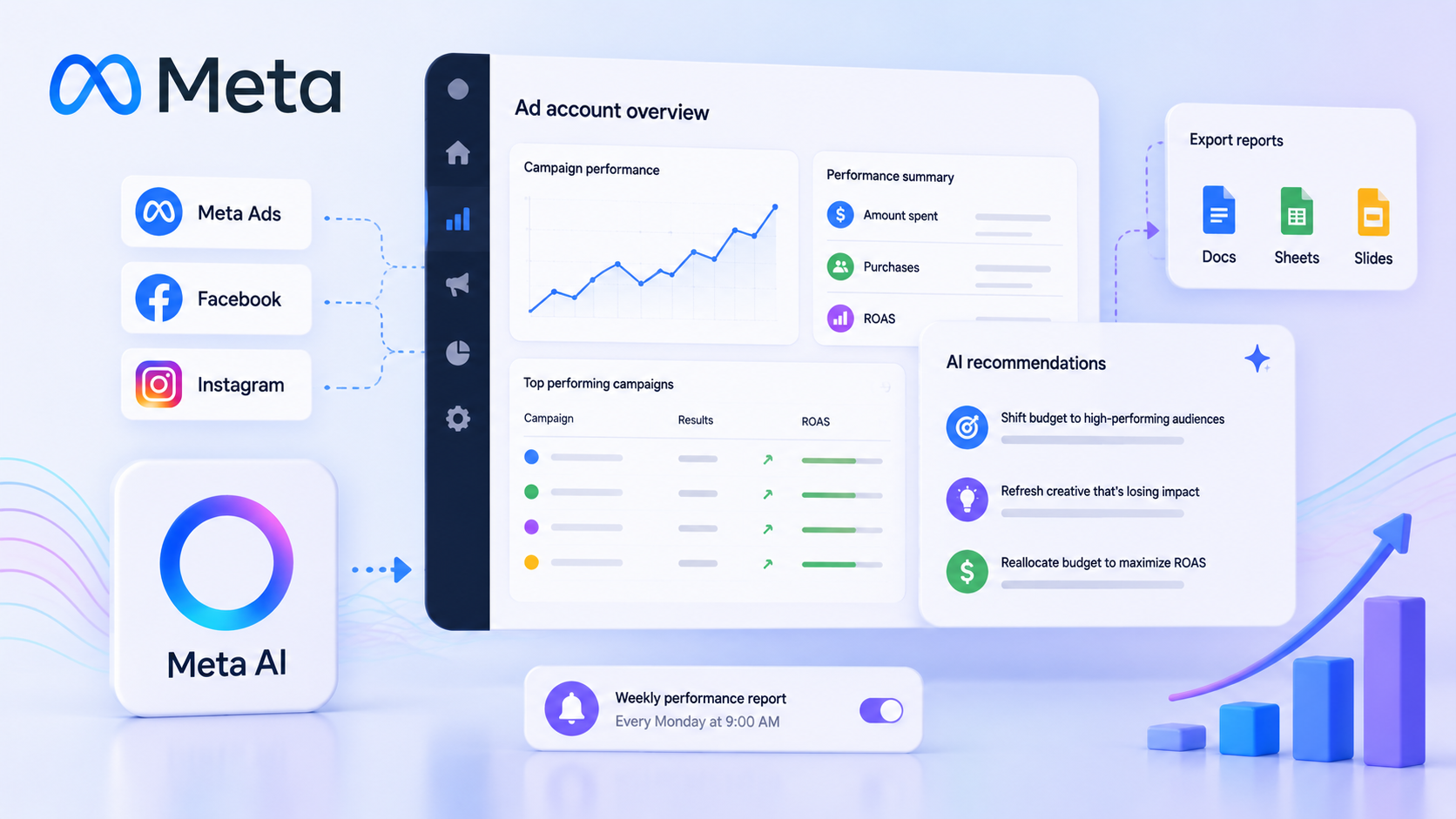
Meta AI can now analyze and optimize Meta Ads campaigns

Meta AI gained the ability to directly analyze Meta Ads campaign performance and recommend or automate optimizations and reporting. This pushes further toward an agentic ad-ops model where the platform's own AI proposes, and potentially executes, optimizations rather than just surfacing dashboards. Media buyers should watch how much decision authority these recommendations quietly absorb.

techcrunch.com

A third of web pages published since ChatGPT's launch show signs of AI authorship, study finds

A new study finds roughly a third of web pages published since ChatGPT's launch show signs of AI authorship or heavy AI editing, complicating any assumption that organic web content is human-written. For GEO and content strategy, this raises the bar on differentiation: generic AI-assisted content is now a baseline, not a point of difference. Worth revisiting how AI-assisted versus AI-generated content gets defined internally.

thedrum.com

CMOs need to stop mistaking creator engagement for impact

Kantar's Chief Insights Officer puts numbers on the gap between creator engagement and brand outcome. Only 6% of measured creator content scores strongly on both, and 27% reaches medium to high on both, while a net 61% of marketers plan to spend more on creators in 2026. The argument is that creator work should be run as a capability with its own measurement, not as a channel for buying views.

searchengineland.com

Reddit's ChatGPT Search citations fell 86% in four days: report

Promptwatch analysis of millions of AI responses found Reddit's share of ChatGPT Search citations collapsed from 3.83 percent to 0.52 percent between 14 and 17 August. Google AI Overviews showed only a gradual decline over the same window, pointing to a change inside ChatGPT rather than a shift in the wider web. If a source that size can lose most of its citation share in a weekend, no AI visibility position is durable.

Follow this the easy way.

The daily brief covers this topic and the four others, in one email each morning.

One email each morning, around 07:00 CET. Unsubscribe in one click. Your address is never sold, never shared.