Food For Your Brain

Topic

Earned media

Coverage and conversation a brand did not buy. The part of reach that still has to be deserved.

41 marks · first on 17 August 2026 · latest on 2 September 2026

Often filed alongside

prnewsonline.com

What Amgen's MrBeast partnership shows about communicating complex issues

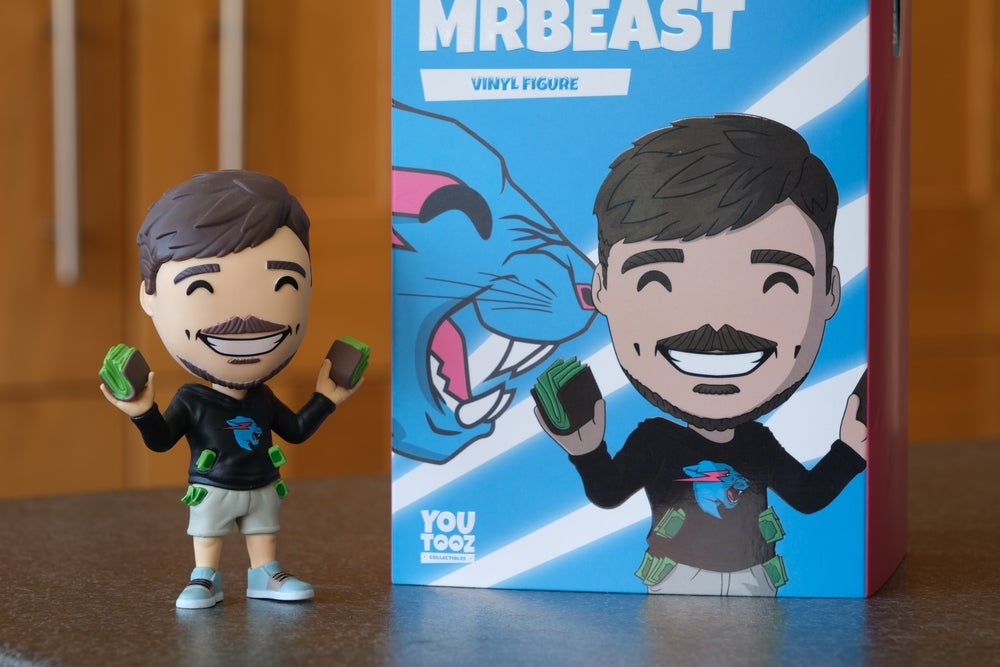
A pharma company used one of the largest creators on the planet to carry a genuinely difficult subject, and the analysis is about comprehension rather than reach. It reframes creator selection around who can explain something to a wide audience, not who can be seen by one. The creator functions as a translation layer, not a megaphone. That distinction is the whole argument for credibility over follower count.

searchenginejournal.com

107 million AI answers analysed: community content is half of every citation set

Across 107 million AI answers on four engines, community and user-generated content sits at almost exactly half of citations in each sector studied: 51% IT services, 50% consumer goods, 50% communication. Editorial and reference take 47%, 4% and 40%; brand-owned pages take 2%, 46% and 10%. Reddit is a top three source in all three. Google AI Overviews leans on YouTube and Reddit, ChatGPT on Wikipedia and trade media. Note the limit: only three sectors, so the figures are directional elsewhere.

searchenginejournal.com

AI tools recommend brands, then cite somebody else

A Shero Commerce study of 1,851 sources across 60 product categories on Google AI Mode, ChatGPT and Perplexity found only 2.8% of cited sources were brand-owned pages. Where a tool named a brand as a recommendation (159 instances), the brand's own page was cited just 31% of the time, while third-party editorial accounted for 59% of citations. Being recommended and being cited are two different outcomes, and brands mostly get the first.

techcrunch.com

Radar makes podcasts searchable, and usable by AI agents

Particle's Radar transcribes and analyses more than 130,000 podcasts and exposes the result through an API and an MCP integration, so podcast content becomes retrievable by both human search and AI agents. Spoken content has been effectively invisible to the systems that now answer questions, and this moves a whole earned channel into the citable set. A podcast mention that used to vanish with the episode can now be retrieved, quoted and attributed. It also widens the surface anyone can monitor.

digiday.com

The post-traffic era of the open web is taking shape

Human traffic is declining as AI crawlers consume a growing share of publisher content, pushing publishers away from scale-driven models toward brand building and audience diversification. The open web is splitting into two audiences, human visitors and machine readers. If publishers stop chasing traffic, a pitch built on traffic potential loses its leverage and a pitch built on access and originality gains it. That changes what earns coverage, not just how it is counted.

searchengineland.com

AI visibility has two jobs: execute SEO and mobilize the organization

AI engines apply different criteria when they shift from answering an informational question to making a recommendation, and the recommendation layer draws on evidence SEO does not control: third-party reviews, support quality, comparison coverage, product documentation. Closing those gaps needs product, support and operations, not the search team. You cannot optimise your way into being recommended, because the engine is reading what other people say about you.

digiday.com

USA Today Co. is reformatting content to attract more AI licensing deals

The publisher is restructuring content formats so its material is easier for AI systems to ingest and surface in answer engines. It is a bid to monetise trusted journalism through machine distribution rather than page views. Notable as a supply-side move: publishers reshaping their output for the citation layer changes what AI engines have available to quote.

prnewsonline.com

Podcast Guesting Is a Core PR Strategy. Here's How to Get Your Client Booked.

Podcast guest pitching is emerging as a structured earned-media channel: listeners trust the host, not the guest, so bookings hinge on producer relationships and pitches that describe the episode's value rather than the guest's credentials. So what: treat podcast outreach with the same rigor as influencer seeding, building relationships with producers ahead of any pitch.

digiday.com

How AI search has impacted the web traffic of over 50 advertisers

Measured across 54 monitored advertiser clients, Google's AI Overviews have cut organic web traffic by more than 10% on average. Direct-to-consumer brands and high-consideration purchases take the worst of it, because those are precisely the queries an AI Overview answers in place. High-consideration categories are structurally the most exposed. Owned destinations are losing their share of the journey while cited third-party content gains.

digiday.com

WTF are fandoms, and why are marketers chasing them?

Fandom starts where attention turns into identity, a formulation from Alice Woo at New Engen. The piece names two recurring mistakes: treating fandom as a substitute for media rather than a complement, and trying to operationalise it with metrics too crude to capture depth of identity. Sport, the most mature fandom market, is forecast to add 5.3 billion dollars in advertising spend between 2026 and 2030. The measurement warning is the useful part, since an existing community shows up in neither reach nor engagement rate.

searchengineland.com

3 phases to build authority and earn AI citations

A three-phase model for AI citations: crawlability, then fresh owned content, then digital PR and third-party coverage. The one hard number, from AirOps research, is that up to 85% of top-of-funnel B2B brand mentions in AI search come from third-party content rather than a brand's own pages. Worth keeping with its caveat: the sample is B2B and top-of-funnel, so it corroborates rather than proves.

socialmediatoday.com

LinkedIn says 1M people have reported AI slop

LinkedIn's new report button was used by over a million people in two weeks, and flagged content is seeing roughly 40% fewer views. The target is stated as polished but empty writing rather than AI assistance itself, so refining a post is fine and publishing a generic one is not. What makes it unusual is that the detector is other readers, not a classifier.

digiday.com

Creators are moving into brands' AI search playbooks

Marketers are commissioning creator content specifically to influence what large language models say about a brand, because the models crawl social platforms and third party sources far more readily than brand-owned pages. It reframes a creator partnership as a sourcing layer for AI answers, not only as reach. Two agendas that were separate until now, creator strategy and AI visibility, are converging on the earned side.

socialmediatoday.com

75 percent of LinkedIn AI citations come from individual profiles, not company pages

An analysis of 9.5 million citations finds that when AI engines cite LinkedIn, roughly three quarters of the time they are quoting an individual's profile or posts rather than a company page. The person is cited about three times as often as the brand. It puts a hard ratio on something the executive and employee communications argument previously had to assert. Worth noting the piece is sponsored content, so the figure needs tracing back to the underlying study before it gets reused.

searchengineland.com

Why creator content belongs in your AI search strategy

Tinuiti's Q1 2026 research found roughly 82% of AI citations point to earned media rather than a brand's own site. YouTube's presence in Google AI Overviews grew from 3.6 million to 36.2 million keywords year over year, with citation share varying sharply by category, 13% for apparel against 3% for over-the-counter health. The striking number: 40.83% of cited videos had fewer than 1,000 views, which inverts the assumption that visibility follows audience size.

marketingdive.com

Crocs hatches new mascot Niles to enrich brand storytelling

Crocs introduced Niles, a six foot reptile mascot who appears in a social series interacting with real employees. The format is a neat answer to the usual blocker on employee content: the mascot carries the entertainment burden so staff only have to react. Nobody is asked to be the performer, which is normally why these programmes stall.

digiday.com

Brand marketers are adopting fan-first social media strategies

Large marketers are trading broad reach for deep engagement with a devoted core, and answering them in real time. Poppi took 34% of the functional soda category this way, while McDonald's leans on a marketing director with 40,000 X followers and Marks & Spencer on a staffer with 93,100 on Instagram. The mechanism runs through named individuals rather than brand handles, which means giving up control by design. The named risk is employees leaving with the audience they built.

tubefilter.com

Creators rely on brand deals, but only 15% fully trust sponsored content from other creators

CreatorIQ surveyed 5,095 creators. 46% depend on brand partnerships as their primary income, yet only 15% say they fully trust sponsored content from other creators when deciding what to buy. Above 500K followers, 53% report tension between what the audience wants and what the sponsor wants. The trust-building behaviour is naming a product's downsides as well as its upsides.

Follow this the easy way.

The daily brief covers this topic and the four others, in one email each morning.

One email each morning, around 07:00 CET. Unsubscribe in one click. Your address is never sold, never shared.