Food For Your Brain

Topic

Compliance

Disclosure, consent, and the rules that decide what a brand may claim and what a creator must admit.

36 marks · first on 19 August 2026 · latest on 3 September 2026

Often filed alongside

marketingdive.com

Amazon's ad auction surcharges secretly bilked brands of billions, FTC alleges

The FTC alleges Amazon concealed surcharges inside its ad auctions, and internal documents reportedly show the company anticipated advertiser trust issues if the practice came to light. This lands squarely in the same week's broader ad-tech transparency reckoning already hitting Google's auction business. Worth watching for parallels in how platforms disclose, or don't, auction mechanics as regulators circle programmatic advertising more broadly.


socialmediatoday.com

Instagram Updates Tags for AI Profiles

Instagram is tightening labeling and limiting the reach of undisclosed AI-generated profiles, responding to growing user backlash against unlabeled AI influencers. This raises the bar for disclosure compliance on any AI-persona or virtual-influencer activity. Expect other platforms to follow with similar visibility penalties for undisclosed synthetic accounts.

platformer.news

Meta settles with the states over child safety failures

Meta agreed to pay over $17B and adopt mandatory two-hour daily limits plus overnight cutoffs for under-18 users, after internal research reportedly showed hiding like counts would help but was shelved over a 1% ad revenue hit. The settlement is being framed as a new industry standard, so YouTube and TikTok may face pressure to match these defaults to avoid similar liability. Anyone running youth-adjacent social campaigns should expect tighter platform-side guardrails soon.

socialmediatoday.com

Meta's settlement carries conditions for YouTube and TikTok too

Meta settled with 29 states over child safety for a sum reported between 17.1 and 18 billion dollars, with new teen protections including time limits and notification restrictions. Full payment is conditioned on YouTube and TikTok adopting comparable measures. A private settlement is functioning as de facto cross-platform regulation, without a regulator writing a rule. If those limits spread, audience availability shifts on the platforms everyone plans against.

marketingdive.com

Meta removes the option to exclude ad placements

Meta is withdrawing advertisers' ability to exclude specific placements, pushing further into fully automated placement selection. Brands lose control over which apps and surfaces carry their promotions. Adjacency control is being removed in favour of platform optimisation, with very little fanfare. The controls teams rely on for brand safety are shrinking quietly rather than being debated.

fastcompany.com

Meta's mega settlement could change social media UX as we know it

Meta has settled the state attorneys general case over teen mental health, with the headline figure reported anywhere from 16.7 to 18 billion dollars over ten years depending on the outlet, so it is best treated as a range. The product commitments matter more than the number: default two-hour daily limits for under-18s, notification restrictions, stronger parental controls, productive pauses, and non-personalized feeds. A settlement that alters the feed alters the distribution assumption under every plan built on it. Worth noting the age-verification technology the whole arrangement depends on is widely reported as unreliable.

techcrunch.com

X sends cease-and-desist to open source project Nitter over alleged scraping

X sent cease-and-desist letters demanding the shutdown of Nitter, the open-source tool that let people read posts without an account, ads or tracking, citing API circumvention. It is the latest step in a broader pattern of platforms using legal rather than just technical means to shut down third-party access and unofficial data pipelines. Worth watching if your team relies on any scraping-adjacent tooling for social listening or monitoring.

tubefilter.com

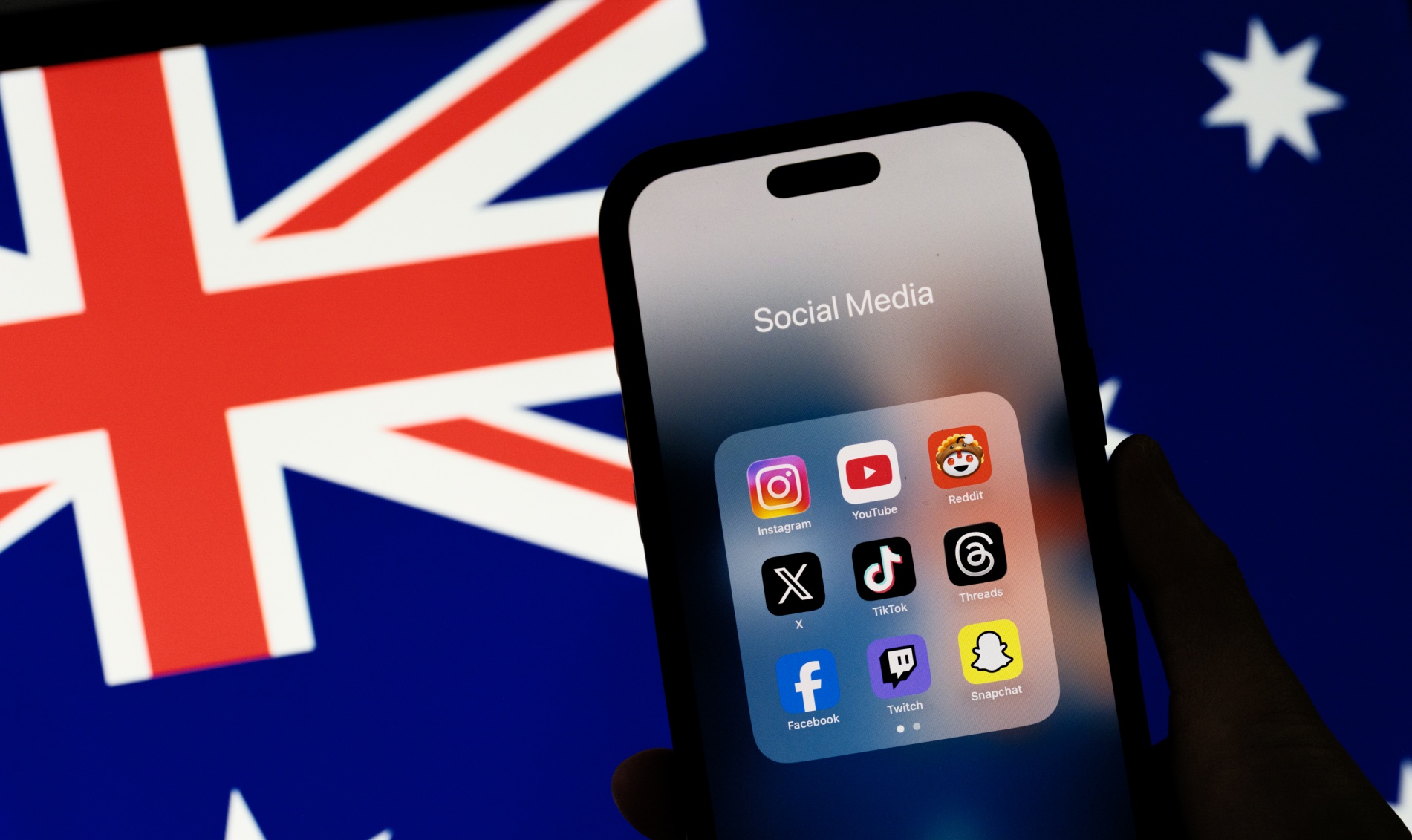
Australia tried to keep kids off social media. Its ban has had the opposite effect.

Nine months after Australia's youth social media ban came into force, usage data shows teen time on the platforms has held steady or edged up. The finding suggests a hard regulatory restriction alone does not shift behaviour when workarounds are trivial. A relevant data point for anyone drafting age-gating policy elsewhere.

socialmediatoday.com

New Zealand introduces teen social media restrictions

New Zealand now requires platforms including Instagram and TikTok to verify that users are over 16, following Australia down the same road. Enforcement sits with the platforms rather than with parents, which is what makes it bite. Two markets in one region have now legally redrawn who a brand can reach on social. Age verification has become a market-level compliance constraint, not a platform setting.

techcrunch.com

Is it legal to train AI models on copyrighted books? It's complicated

Most published authors have unknowingly had their work used to train AI models, and whether that is legally permissible remains genuinely unsettled across jurisdictions. This matters beyond publishing: any brand or creator putting out long-form content is effectively training data too, and the eventual legal outcome will shape licensing and compensation norms for content broadly. Worth monitoring as case law develops.

tubefilter.com

Senators question TikTok over algorithm experiment that withheld safeguards

Bloomberg reporting revealed TikTok withheld content safeguards from around 15 million users held as a control group in an algorithm experiment. Senators are now demanding answers, and the case has become part of a wider legal argument about platform design. A concrete instance of platform risk that sits upstream of anything a brand controls on the same surface.

socialmediatoday.com

Will Meta be found guilty of driving social media addiction?

A major US lawsuit against Meta opened last week with potential damages reported at up to a trillion dollars, centred on whether platform design deliberately drives compulsive use. The outcome would reach far beyond Meta, since the same design patterns are industry standard. Relevant to anyone whose distribution depends on surfaces whose legal footing is contested.

digiday.com

The new AI playbook: the rules brands are setting around customer-facing content

A survey of how large advertisers including Goodwipes, Hilton and Unilever are codifying where generative AI may touch customer-facing work: heavy use upstream in production and optimisation, tighter constraints the closer output gets to the customer. These are written internal rules rather than public positions, and they are being set before an incident rather than after one. The workable version governs where AI output appears, not whether AI was used, because rules written the other way round cannot be enforced.

techcrunch.com

Senators demand answers from TikTok over experiment that disabled safeguards

US senators are pressing TikTok for details after reports it ran an experiment disabling safety safeguards to measure the effect on user engagement. The episode adds fresh regulatory and reputational risk on top of platform performance risk for anyone running always-on TikTok programs. A reminder to track platform-safety scrutiny alongside reach and engagement metrics.

marketingdive.com

IAB revisits AI disclosure in ads as legal requirements multiply

The IAB published version two of its AI Transparency and Disclosure Framework, responding to new AI-in-advertising rules that have come into force across the EU, parts of Asia, and US states like New York and California since the first version in January. The guidance warns that over-labeling creates disclosure fatigue, and recommends flagging AI only for consumer-facing synthetic content such as AI images or digital twins, not routine editing. A useful reference as more jurisdictions legislate AI disclosure in ads.

tubefilter.com

TikTok agrees generative AI guardrails with the Motion Picture Association

ByteDance has signed a memorandum with the Motion Picture Association committing to safeguards against unauthorised deepfakes on TikTok. It builds on the IP protections already written into the updated generative models used across TikTok and CapCut. Rights holders are now negotiating platform-level guardrails directly rather than waiting for regulation.

digiday.com

OpenAI's ads business hits Europe at the six month mark

OpenAI switches on advertising across 31 European markets on 24 August, six months after the US pilot began. The rollout required GDPR work, in particular explicit consent for personalised targeting, so the European product is a consent-gated version of the American one. The surface where people ask questions is becoming a paid channel in Europe, not only an organic one.

Follow this the easy way.

The daily brief covers this topic and the four others, in one email each morning.

One email each morning, around 07:00 CET. Unsubscribe in one click. Your address is never sold, never shared.