Food For Your Brain

Topic

GEO

Generative engine optimisation: being cited by AI answers rather than ranked by search results.

71 marks · first on 18 August 2026 · latest on 27 August 2026

Often filed alongside

searchengineland.com

Is top-of-funnel content still worth it in 2027?

An analysis of 30 major publishers finds top-of-funnel content declining in YMYL categories while improving in B2B tech, so the collapse is uneven rather than universal. What holds up against AI summaries is interactive tooling and content carrying identifiable subject-matter expertise; generic how-to articles are what gets absorbed. The practical read is that the defensible top of funnel is the part a summary cannot reproduce.

thedrum.com

Did the rush of brands to Reddit kill the platform's ChatGPT citations?

Brands piled into Reddit to influence how they show up in LLM answers, then Reddit's ChatGPT citation share reportedly fell more than 80% within days, per PromptWatch and Petra Labs data. Other platforms including YouTube, Instagram and TikTok saw citation drops too, and nobody has a confirmed explanation yet. A sharp reminder that GEO visibility gains can evaporate overnight and shouldn't be treated as a stable channel.

searchengineland.com

AI visibility has two jobs: execute SEO and mobilize the organization

AI engines apply different criteria when they shift from answering an informational question to making a recommendation, and the recommendation layer draws on evidence SEO does not control: third-party reviews, support quality, comparison coverage, product documentation. Closing those gaps needs product, support and operations, not the search team. You cannot optimise your way into being recommended, because the engine is reading what other people say about you.

digiday.com

USA Today Co. is reformatting content to attract more AI licensing deals

The publisher is restructuring content formats so its material is easier for AI systems to ingest and surface in answer engines. It is a bid to monetise trusted journalism through machine distribution rather than page views. Notable as a supply-side move: publishers reshaping their output for the citation layer changes what AI engines have available to quote.

searchengineland.com

ChatGPT Ads adds automated bidding, platform targeting

ChatGPT Ads added a Maximize results automated bid strategy plus per-surface targeting (iOS, Android, Web) and view-through conversion reporting. So what: OpenAI is racing ChatGPT Ads toward feature parity with mature ad platforms, so measurement teams should start separating click-through from view-through conversions now, before budgets shift toward this channel.

digiday.com

How AI search has impacted the web traffic of over 50 advertisers

Measured across 54 monitored advertiser clients, Google's AI Overviews have cut organic web traffic by more than 10% on average. Direct-to-consumer brands and high-consideration purchases take the worst of it, because those are precisely the queries an AI Overview answers in place. High-consideration categories are structurally the most exposed. Owned destinations are losing their share of the journey while cited third-party content gains.

searchengineland.com

AI search is here, but marketers still call it SEO

New research finds 81% of marketers still describe their internal AI search visibility work as SEO, despite the industry pushing GEO and AEO as replacement terms. The same study reports an average 24% of total search or content budget already allocated to AI search visibility, and buyers valuing case studies and clear methodology far above terminology fluency. The money has moved even though the vocabulary has not, which makes the acronym a barrier rather than a shortcut.

searchengineland.com

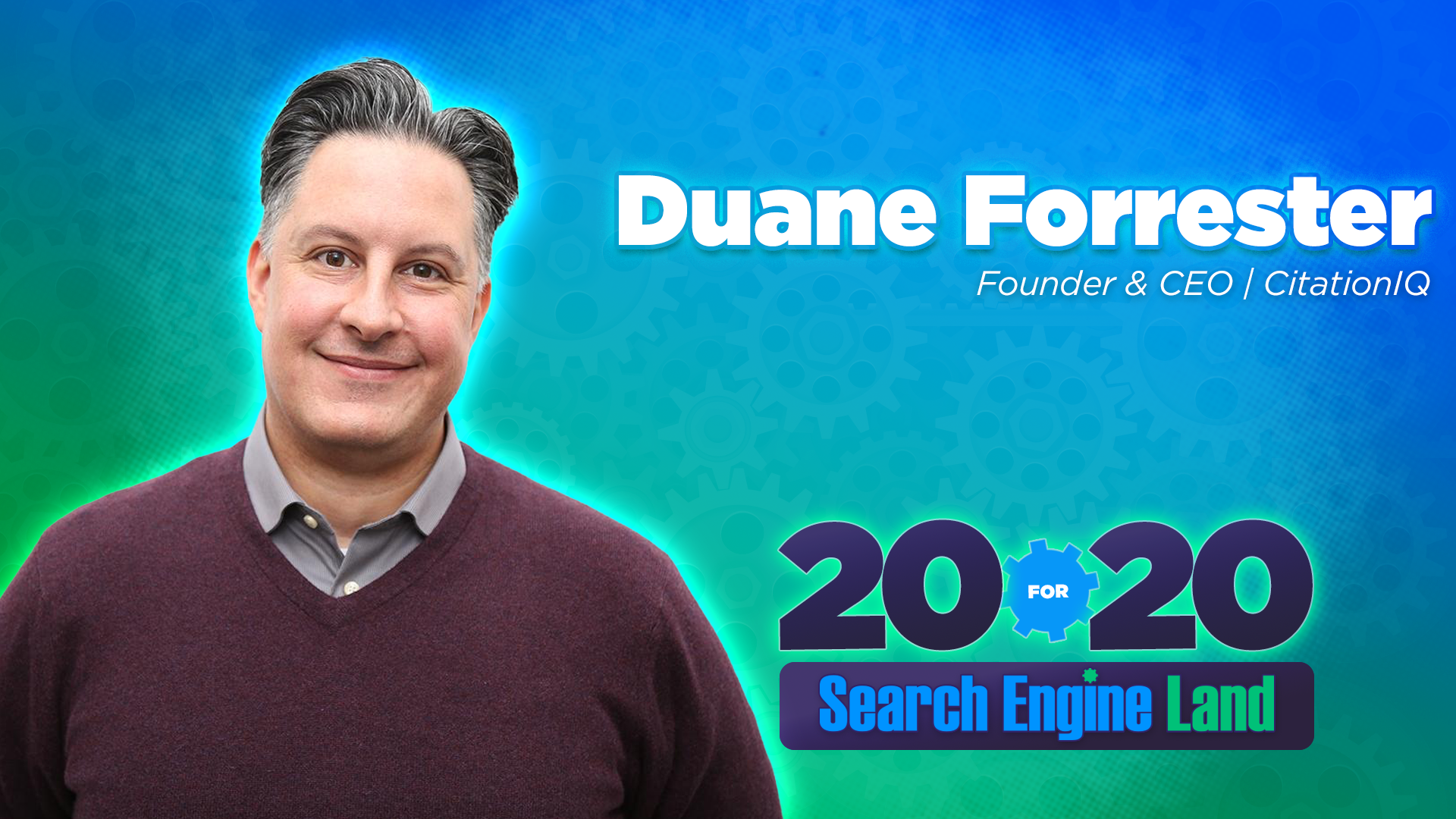
Duane Forrester: AI is rewriting SEO, but the mission is the same

Industry veteran Duane Forrester argues AI is rewriting the mechanics of SEO, but the underlying mission, matching content to what someone wants at the moment they want it, has not changed. It is a useful corrective against overreacting to every AI-search algorithm shift. A good grounding read alongside more tactical GEO pieces.

prnewsonline.com

PR Roundup: Lucky Charms Wins RushTok, AI Search Rewards Relevance Over Scale, and eos Shows What Community Engagement Looks Like

This roundup bundles three concrete data points: Lucky Charms' RushTok stunt drove real engagement, AI search engines are rewarding content relevance over sheer scale, and eos is treating community engagement, not reach, as its core social metric. The AI-search point is the most actionable, reinforcing that optimizing for citation in AI answers is becoming distinct from classic SEO scale plays. Worth rereading when planning always-on content strategy.

thedrum.com

GEO and the economics of discovery

A sharp explainer on generative engine optimization: as AI answer engines replace some search behavior, the economics of being cited, or not, inside an AI answer reshape how discovery and referral traffic actually work. It argues brands need a distinct GEO strategy rather than treating it as a subset of SEO. Useful framing for anyone building an AI-search measurement plan.

searchengineland.com

How to measure the true value of creators and review content

Adam Riemer argues review and creator content drifts over time from acquisition into parasitic margin leakage, commissions paid on repeat visits from customers already inside the funnel. His test is incrementality rather than attribution: a platform reporting 100,000 dollars in attributed revenue has evidenced participation in transactions, not causation. He also notes that niche creators and influential sites appear to shape AI generated answers, while refusing to turn that observed visibility into a claim about training data. Unusually disciplined about the limits of its own evidence.

searchengineland.com

3 phases to build authority and earn AI citations

A three-phase model for AI citations: crawlability, then fresh owned content, then digital PR and third-party coverage. The one hard number, from AirOps research, is that up to 85% of top-of-funnel B2B brand mentions in AI search come from third-party content rather than a brand's own pages. Worth keeping with its caveat: the sample is B2B and top-of-funnel, so it corroborates rather than proves.

searchengineland.com

JavaScript links can make your pages invisible to AI search

A 41-day controlled experiment found Googlebot reached only 2 percent of JavaScript-linked pages, while GPTBot, ClaudeBot and other AI crawlers found none of the JavaScript-injected navigation links at all. Only Google's crawler stack executes JavaScript, so client-side content injection is invisible to AI retrieval regardless of how a page performs in classic search. Fixing link architecture before launch worked far better than retrofitting afterwards.

searchengineland.com

Reddit's ChatGPT Search citations fell 86% in four days: report

Promptwatch analysis of millions of AI responses found Reddit's share of ChatGPT Search citations collapsed from 3.83 percent to 0.52 percent between 14 and 17 August. Google AI Overviews showed only a gradual decline over the same window, pointing to a change inside ChatGPT rather than a shift in the wider web. If a source that size can lose most of its citation share in a weekend, no AI visibility position is durable.

searchengineland.com

Business websites dominate Gemini local AI search citations: study

Across 14,472 citations, business websites made up close to 60 percent of Gemini's local search sources and Reddit came second at 13.7 percent. The more useful finding is instability: identical repeated searches overlapped only 40 percent of the time, against roughly 90 percent for the traditional Google local pack. Any one-shot AI visibility measurement is a sample, not a position.

searchengineland.com

ChatGPT ads are expanding to 31 European countries

OpenAI begins serving ads across 31 European markets on 24 August, including France, Germany and Spain, built on explicit user consent rather than a legitimate interest claim. The offer covers conversion optimisation, geo-targeting, custom audiences and third party measurement, so it is a full ad product rather than a pilot. The assistant that answers brand questions now also sells placement against those answers.

digiday.com

Creators are moving into brands' AI search playbooks

Marketers are commissioning creator content specifically to influence what large language models say about a brand, because the models crawl social platforms and third party sources far more readily than brand-owned pages. It reframes a creator partnership as a sourcing layer for AI answers, not only as reach. Two agendas that were separate until now, creator strategy and AI visibility, are converging on the earned side.

searchengineland.com

Google Search Console now connects social content to search demand

Search Console has added Platform properties, showing which search queries drive traffic to a brand's TikToks, Reels and YouTube Shorts, with query groups that surface trending patterns. It creates a free first-party bridge between social content and search intent. Social content can now be planned against demand data rather than only against performance data.

searchengineland.com

What 9 months of AI Overview data and 51,000+ tracked events reveal

A study tracking more than 51,000 events over nine months puts Google AI Overviews at roughly 7.53% of organic sessions on average, with heavy volatility: a peak around 16 to 17% in February and March 2026, down to 2 to 4% recently. The harder finding is attribution, with 22.4% of AI Overview traffic landing in analytics as Direct rather than Organic. AI search traffic is smaller than the hype and larger than the dashboards say. One dataset from one vendor, to be cited as such.

searchengineland.com

The $113,000 paid search test: How much traffic did organic replace?

A 13-week controlled experiment pausing branded paid search found organic recaptured 65% of the paid-attributed revenue at zero acquisition cost, while running paid was mostly defending clicks organic would have earned anyway. It's a rare, real budget-scale test of a question most teams only argue about anecdotally. Directly useful evidence for anyone building the case to reallocate branded paid-search budget toward organic or content investment.

Follow this the easy way.

The daily brief covers this topic and the four others, in one email each morning.

One email each morning, around 07:00 CET. Unsubscribe in one click. Your address is never sold, never shared.