Food For Your Brain

Topic

Creator economy

How creators get paid, who owns the work, and what happens to brands that treat them as media inventory.

118 marks · first on 17 August 2026 · latest on 21 August 2026

Often filed alongside

tubefilter.com

Patreon rolls out 30 content tools as CEO calls the current web a failed promise for creators

Patreon is shipping around thirty features including clipping, discovery and creator analytics, repositioning itself as a destination rather than a payment layer bolted onto other platforms. Jack Conte frames it as an answer to creators' frustration with algorithmic distribution. Whether an audience follows a creator off an algorithmic feed is still the open question.
digiday.com

For brands, the creator ambassador is becoming a creator executive

Creators are taking named C-suite titles at Katjes, Cool Sips, Cherub and Blenders, mostly as partners rather than employees. The shift is from buying reach to buying judgement, which changes the contract and the internal owner. The piece is candid that many of these appointments are announced for a launch and then quietly dropped.

thedrum.com

CMOs need to stop mistaking creator engagement for impact

Kantar's Chief Insights Officer puts numbers on the gap between creator engagement and brand outcome. Only 6% of measured creator content scores strongly on both, and 27% reaches medium to high on both, while a net 61% of marketers plan to spend more on creators in 2026. The argument is that creator work should be run as a capability with its own measurement, not as a channel for buying views.

digiday.com

Inside toy brand Sticki Rolls' YouTube strategy to win over Gen Alpha

Sticki Rolls built over a billion views of creator-made unboxing and trading content before moving into major retail. The sequence is the interesting part: the audience was established on YouTube first and retail followed the demand. A clean example of a collectible category being made viable by creators rather than by advertising.

thedrum.com

Because we're worth it: CMOs who use creators just for reach are missing a trick

This piece maps a spectrum of creator involvement, from creators used purely as a media buy for reach, to creators bringing an authentic voice to a brief (the CeraVe x Anwar Jibawi TikTok take on Romeo and Juliet is the example, an award winner), up to creators treated as a cultural asset where the partnership is the campaign itself. The core argument: match the creator's role to the actual campaign goal instead of defaulting to reach every time. A handy framework to keep on hand when briefing creator partnerships.

marketingdive.com

Chipotle broadens Gen Alpha marketing with Salish Matter collab

Chipotle partnered with a 16-year-old YouTube and TikTok creator on a custom Kids Meal, the first time the chain has built a personalised menu item around a young creator. It is product co-creation rather than a content buy, which gives the partnership something to point at beyond a post. A useful reference for brands trying to reach Gen Alpha without talking down to them.

tubefilter.com

DiVine, Vine's successor, opens to the public with Taco Bell as first brand partner

The six-second video app backed by Jack Dorsey launched publicly with Taco Bell signed as its first official brand partner. It enforces strict anti-AI-content rules and positions itself on creative collaboration and user ownership rather than algorithmic distribution. Taking the first slot on a new platform buys disproportionate attention for very little spend.

digiday.com

Creators are moving into brands' AI search playbooks

Marketers are commissioning creator content specifically to influence what large language models say about a brand, because the models crawl social platforms and third party sources far more readily than brand-owned pages. It reframes a creator partnership as a sourcing layer for AI answers, not only as reach. Two agendas that were separate until now, creator strategy and AI visibility, are converging on the earned side.

tubefilter.com

YouTube is reportedly offering creators millions if they don't sign deals with Netflix

YouTube is paying top creators large retention sums to stay exclusive while Netflix recruits them, and reportedly excludes those who sign elsewhere from marketing pushes and some revenue-sharing. The scarce asset is no longer distribution but the creator relationship, and platforms are now bidding for it with cash. For brands, a creator under a platform retention deal arrives with contractual constraints attached.

socialmediatoday.com

TikTok Live adds AI-generated intros

TikTok now lets creators generate AI-powered self-intros for live broadcasts, lowering the production bar for going live regularly. It's a small feature, but it signals platforms packaging generative AI directly into creator tooling rather than leaving it to third-party apps. Worth tracking as a leading indicator for where AI-assisted production shows up next across short-form platforms.

fastcompany.com

Creator marketing fails without the details

Creator campaigns increasingly fail on execution, not strategy: which creators actually move metrics and which formats compound engagement over time. The piece argues for treating creator ops as an ongoing measurement discipline rather than a one-off campaign briefing. A useful reminder to build always-on creator performance review into any influence program, not just wrap reports.

marketingdive.com

Under Armour ends its decade-long partnership with Dwayne Johnson

Under Armour and Dwayne Johnson have closed the Project Rock partnership after ten years, months after the brand also parted with Stephen Curry. Both exits sit inside a wider marketing reset at a company under pressure. Two of the most expensive celebrity endorsements in sportswear were unwound in the same year, which is a live data point on where megatalent contracts land when budgets tighten.

digiday.com

USA Fencing relies on creators to attract new fans ahead of the 2028 Olympics

USA Fencing is leaning on creator partnerships rather than traditional media to build audience ahead of LA 2028, citing research that 49% of Gen Z sports fans discover new sports through fan-made content rather than broadcast. It is a clear signal that niche and federation-level sports properties now treat creators as a primary discovery channel, not a add-on. Worth watching as a template for other under-exposed sports and leagues courting younger audiences.

techcrunch.com

Higgsfield raises 400 million dollars, quadrupling its valuation in eight months

The AI video generation platform closed a 400 million dollar Series B at a 5.4 billion dollar valuation, up fourfold in eight months. Capital is moving quickly into the tools that sit between a creator and a finished asset. That lowers the cost floor of content production for everyone. The scarce input shifts away from production capability and towards access, judgement and audience trust.

tubefilter.com

A creator sponsors an NCAA team and becomes its official media partner

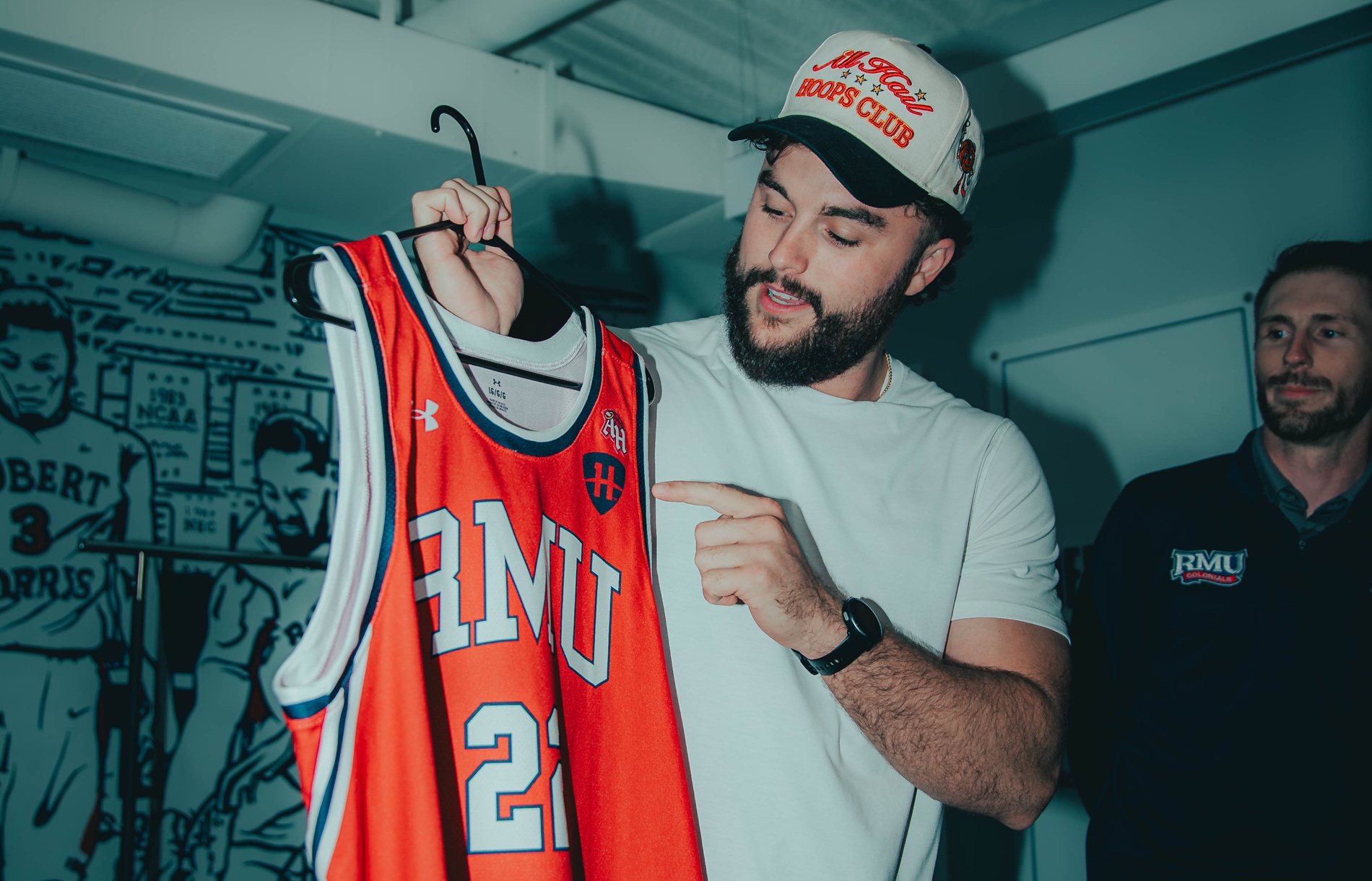
Basketball creator Cullen Honohan put his channel on the jersey of Robert Morris University's Division 1 men's team, and took the official media partner role in the same deal. He now produces the access content the athletic department used to outsource, or never made at all. The creator is not renting the institution's audience, he is supplying both the audience and the production capability. A neat inversion of the usual sponsorship direction.

marketingdive.com

Gen Alpha report: parents outrank influencers on brand preference

A study of Gen Alpha teens puts Amazon and Nike at the top of brand preference, but the interesting finding is the source of influence. Parents, and mothers in particular, carry more weight than creators or platforms. A useful corrective to the assumption that the youngest cohort is shaped mainly by whoever they follow. Household decisions still route through the parent, even for the most online generation measured so far.

tubefilter.com

OnlyFans investor says it will "never use AI in any capacity to disrupt creators"

Architect Capital's James Sagan, who holds a 16% stake in OnlyFans, publicly committed to never using AI to disrupt the platform's creators, positioning AI instead as a fix for payment-processor and banking friction. The pledge lands as AI-generated "nudify" content and deepfakes increasingly threaten independent creators' livelihoods across platforms. Worth watching whether the commitment holds once investors start weighing AI-driven cost efficiencies against creator trust.

tubefilter.com

Super Cooper: Unwell's podcast empire soars to $500 million valuation after strategic investment

Alex Cooper's Unwell reached a $500M valuation after a strategic investment from WTSL, following SiriusXM's $125M deal with her in 2024. Cooper frames trust as "the ultimate distribution channel," citing 70M monthly listeners across the network. It is a strong signal that creator-led media companies can scale into institutional-grade valuations, not just one-off brand deals.

digiday.com

Creators build GEO strategies to get discovered by brands and agencies in AI search

Creators are building answer engine optimisation strategies so chatbots surface them when brands hunt for partners. One creator republished her work as structured text articles for model ingestion and drew 3,048 Google impressions in a month, while others run citation audits on themselves and add Wikipedia pages and podcast transcripts. Brands and agencies now query chatbots to see which creators come up most in a category. The catch: that samples who is best documented, not who is best suited.

Follow this the easy way.

The daily brief covers this topic and the four others, in one email each morning.

One email each morning, around 07:00 CET. Unsubscribe in one click. Your address is never sold, never shared.