Food For Your Brain

Topic

Targeting

Deciding who this is actually for, and accepting who it is not for. The second half is the one that gets skipped.

13 marks · first on 28 July 2026 · latest on 1 September 2026

Often filed alongside

socialmediatoday.com

Snapchat Expands Unified Attribution to All Advertisers

Snapchat is rolling out its unified attribution tool to all advertisers globally, aiming to give a clearer, deduplicated view of ad performance across the funnel. It closes a measurement gap that made Snap's numbers harder to reconcile against other platforms. Relevant for anyone justifying Snapchat spend against multi-touch attribution models.

socialmediatoday.com

Meta's settlement carries conditions for YouTube and TikTok too

Meta settled with 29 states over child safety for a sum reported between 17.1 and 18 billion dollars, with new teen protections including time limits and notification restrictions. Full payment is conditioned on YouTube and TikTok adopting comparable measures. A private settlement is functioning as de facto cross-platform regulation, without a regulator writing a rule. If those limits spread, audience availability shifts on the platforms everyone plans against.

tubefilter.com

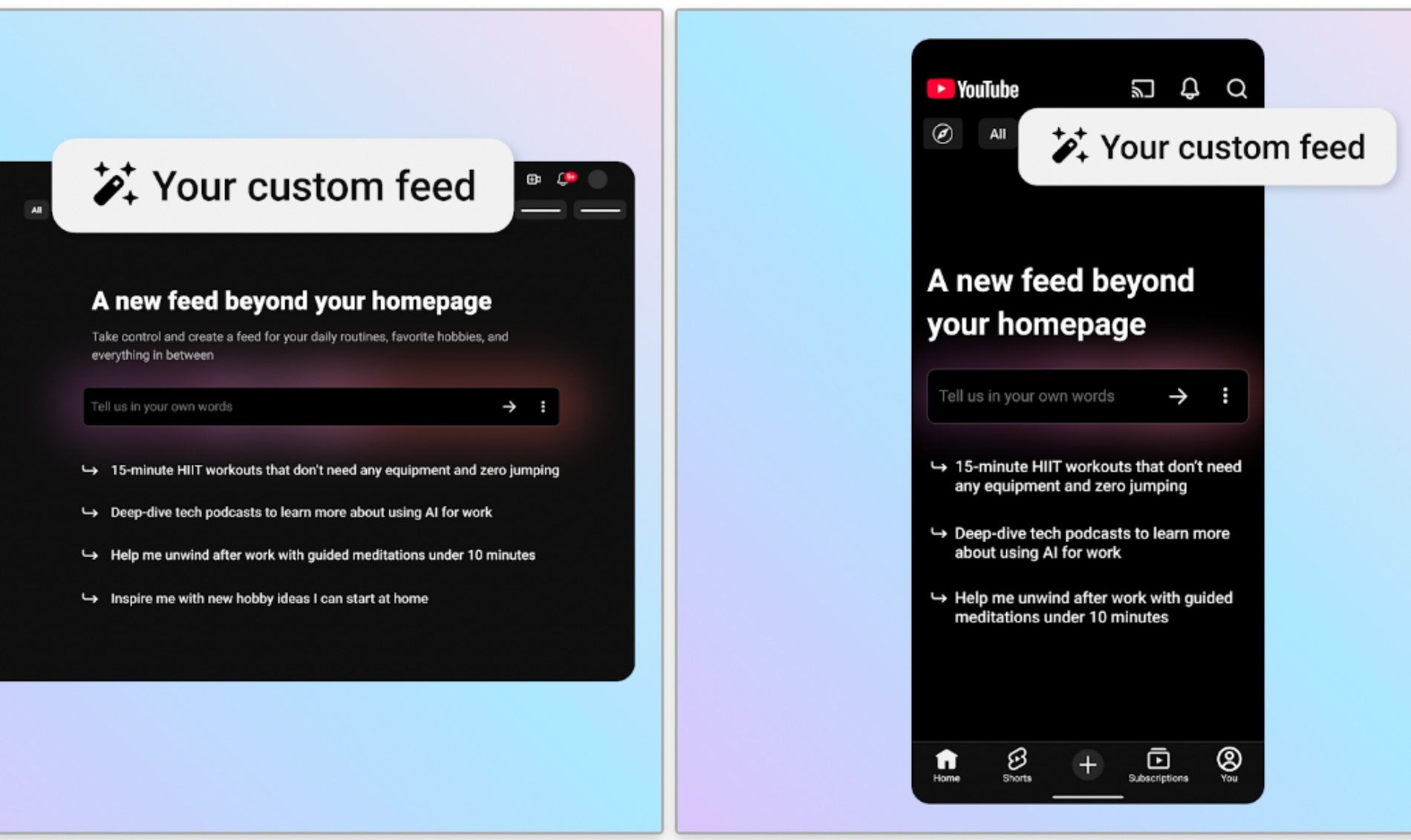
As Bluesky adds more videos, YouTube adds more Bluesky-style custom feeds

YouTube is expanding custom feeds so a single account can build and manage several themed feeds instead of relying on one algorithmic home, reading as a competitive answer to Bluesky. It moves a slice of discovery from algorithmic push to viewer-declared intent. That rewards channels with a legible editorial identity and penalises channels that are archives of everything. A feed a viewer deliberately chooses is the opposite of a general audience.

fastcompany.com

Meta's mega settlement could change social media UX as we know it

Meta has settled the state attorneys general case over teen mental health, with the headline figure reported anywhere from 16.7 to 18 billion dollars over ten years depending on the outlet, so it is best treated as a range. The product commitments matter more than the number: default two-hour daily limits for under-18s, notification restrictions, stronger parental controls, productive pauses, and non-personalized feeds. A settlement that alters the feed alters the distribution assumption under every plan built on it. Worth noting the age-verification technology the whole arrangement depends on is widely reported as unreliable.

adweek.com

OpenAI is testing exclusion targeting for ChatGPT ads

OpenAI is building exclusion controls for ChatGPT advertising after research into contextual relevance. Several independent studies cited here found ChatGPT ads have little to no connection to the conversation they sit alongside. Paid placement inside an assistant is arriving ahead of the matching that would justify it, and the gap is now measured rather than merely suspected. The first generation of AI-surface advertising is being sold on placement, not relevance.

socialmediatoday.com

New Zealand introduces teen social media restrictions

New Zealand now requires platforms including Instagram and TikTok to verify that users are over 16, following Australia down the same road. Enforcement sits with the platforms rather than with parents, which is what makes it bite. Two markets in one region have now legally redrawn who a brand can reach on social. Age verification has become a market-level compliance constraint, not a platform setting.

marketingdive.com

Creator fit beats follower count for brands: here's what the numbers say

CreatorIQ surveyed 5,095 creators across 100 regions with Influencers.club. Brands rank creator suitability first and content performance second, with follower count only eighth, yet pay is still strongly indexed on follower count across every platform. On the creator side 67 percent earn under 10,000 dollars a year and compensation has become the top expectation from a partnership, up 16 points on 2025. A rare dataset measuring the gap between stated selection criteria and actual payment structures.

marketingdive.com

Chipotle broadens Gen Alpha marketing with Salish Matter collab

Chipotle partnered with a 16-year-old YouTube and TikTok creator on a custom Kids Meal, the first time the chain has built a personalised menu item around a young creator. It is product co-creation rather than a content buy, which gives the partnership something to point at beyond a post. A useful reference for brands trying to reach Gen Alpha without talking down to them.

marketingdive.com

Gen Alpha report: parents outrank influencers on brand preference

A study of Gen Alpha teens puts Amazon and Nike at the top of brand preference, but the interesting finding is the source of influence. Parents, and mothers in particular, carry more weight than creators or platforms. A useful corrective to the assumption that the youngest cohort is shaped mainly by whoever they follow. Household decisions still route through the parent, even for the most online generation measured so far.

marketingdive.com

Sociable: Pinterest partners with Zillow for ad targeting

Pinterest's Media Network Connect now lets Zillow Elevate advertisers target Pinterest users against 34 Zillow audience segments (e.g. "fixer-upper shoppers"), built on 200+ housing-related first-party signals rather than broad demographics. It's a clean example of intent data from one platform layered onto another platform's inspiration-stage audience. Worth studying as a targeting-partnership template beyond real estate.

digiday.com

Creators build GEO strategies to get discovered by brands and agencies in AI search

Creators are building answer engine optimisation strategies so chatbots surface them when brands hunt for partners. One creator republished her work as structured text articles for model ingestion and drew 3,048 Google impressions in a month, while others run citation audits on themselves and add Wikipedia pages and podcast transcripts. Brands and agencies now query chatbots to see which creators come up most in a category. The catch: that samples who is best documented, not who is best suited.

autonews.com

Affordability concerns push car buyers to driver-assistance tech over pricey autonomy features

An AutoPacific survey shows buyers prioritising affordable safety features like parking sensors and adaptive cruise over expensive autonomous systems. Interest in semi-autonomous highway driving fell from 43 percent to 24 percent year over year. Economic pressure is reshaping what people actually want to pay for. A useful correction for anyone building product storytelling around autonomy.

Follow this the easy way.

The daily brief covers this topic and the four others, in one email each morning.

One email each morning, around 07:00 CET. Unsubscribe in one click. Your address is never sold, never shared.