Food For Your Brain

Archive

Everything, read first.

No wall, no account, no trimmed notes. If a link is here, someone opened it and wrote down why it mattered.

417 marks · since 20 April 2026 · 0 sponsored

Browse by topic

fastcompany.com

Meta's mega settlement could change social media UX as we know it

Meta has settled the state attorneys general case over teen mental health, with the headline figure reported anywhere from 16.7 to 18 billion dollars over ten years depending on the outlet, so it is best treated as a range. The product commitments matter more than the number: default two-hour daily limits for under-18s, notification restrictions, stronger parental controls, productive pauses, and non-personalized feeds. A settlement that alters the feed alters the distribution assumption under every plan built on it. Worth noting the age-verification technology the whole arrangement depends on is widely reported as unreliable.
tubefilter.com

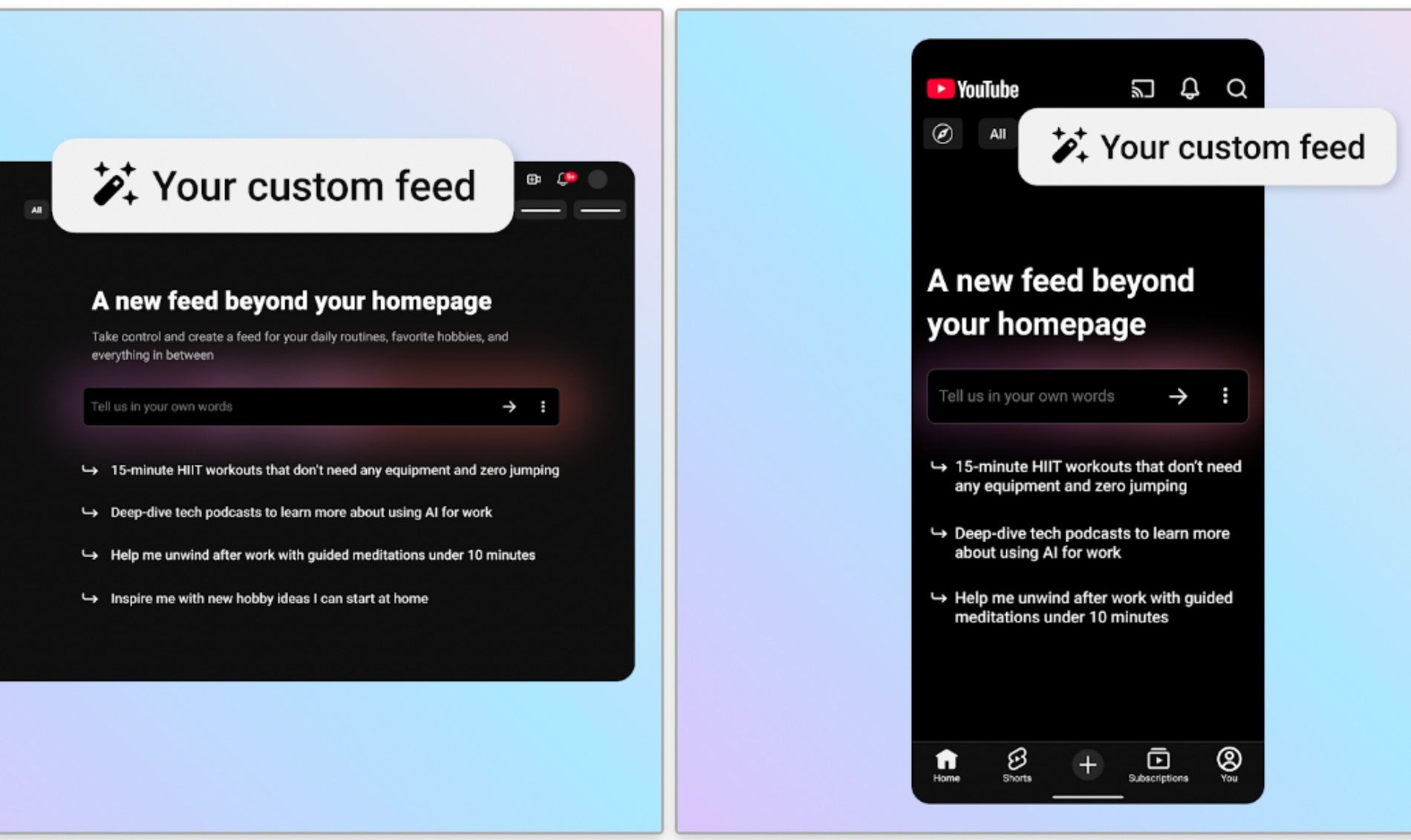
As Bluesky adds more videos, YouTube adds more Bluesky-style custom feeds

YouTube is expanding custom feeds so a single account can build and manage several themed feeds instead of relying on one algorithmic home, reading as a competitive answer to Bluesky. It moves a slice of discovery from algorithmic push to viewer-declared intent. That rewards channels with a legible editorial identity and penalises channels that are archives of everything. A feed a viewer deliberately chooses is the opposite of a general audience.

adweek.com

OpenAI is testing exclusion targeting for ChatGPT ads

OpenAI is building exclusion controls for ChatGPT advertising after research into contextual relevance. Several independent studies cited here found ChatGPT ads have little to no connection to the conversation they sit alongside. Paid placement inside an assistant is arriving ahead of the matching that would justify it, and the gap is now measured rather than merely suspected. The first generation of AI-surface advertising is being sold on placement, not relevance.

searchengineland.com

Google adds link carousels for developing topics in AI Mode

Google has begun showing link carousels for developing topics inside AI Mode, framed as making it easier to reach the original coverage. The same reporting notes overall click volume remains below pre-AI search levels despite the addition. Being cited and being clicked are now two separate outcomes, and the first is holding up considerably better than the second. The measurement consequence is to track citations rather than referral traffic.

techcrunch.com

Radar makes podcasts searchable, and usable by AI agents

Particle's Radar transcribes and analyses more than 130,000 podcasts and exposes the result through an API and an MCP integration, so podcast content becomes retrievable by both human search and AI agents. Spoken content has been effectively invisible to the systems that now answer questions, and this moves a whole earned channel into the citable set. A podcast mention that used to vanish with the episode can now be retrieved, quoted and attributed. It also widens the surface anyone can monitor.

digiday.com

The post-traffic era of the open web is taking shape

Human traffic is declining as AI crawlers consume a growing share of publisher content, pushing publishers away from scale-driven models toward brand building and audience diversification. The open web is splitting into two audiences, human visitors and machine readers. If publishers stop chasing traffic, a pitch built on traffic potential loses its leverage and a pitch built on access and originality gains it. That changes what earns coverage, not just how it is counted.

techcrunch.com

Nvidia closes in on Hugging Face acquisition

Nvidia has reportedly agreed to acquire the open-source AI hub Hugging Face for 12.9 billion dollars, a deal that would extend its chip dominance into the model distribution layer and give it a route back into cloud services. The strategic point is consolidation moving up the stack: the place where open models are found and shared would sit inside the company that makes the hardware they run on. Concentration at the discovery layer is worth watching for anyone whose visibility depends on how models are sourced and served.

searchengineland.com

Is top-of-funnel content still worth it in 2027?

An analysis of 30 major publishers finds top-of-funnel content declining in YMYL categories while improving in B2B tech, so the collapse is uneven rather than universal. What holds up against AI summaries is interactive tooling and content carrying identifiable subject-matter expertise; generic how-to articles are what gets absorbed. The practical read is that the defensible top of funnel is the part a summary cannot reproduce.

techcrunch.com

X sends cease-and-desist to open source project Nitter over alleged scraping

X sent cease-and-desist letters demanding the shutdown of Nitter, the open-source tool that let people read posts without an account, ads or tracking, citing API circumvention. It is the latest step in a broader pattern of platforms using legal rather than just technical means to shut down third-party access and unofficial data pipelines. Worth watching if your team relies on any scraping-adjacent tooling for social listening or monitoring.

technologyreview.com

Bill Gates says we've passed AI's danger thresholds. Now what?

Gates argues AI has already crossed dangerous thresholds in bioweapon design, cyberattacks and job displacement, and that public debate lags far behind the tech industry's own awareness of the risks. He is pushing for external monitoring of models that can design novel molecules and a token tax on AI revenue to fund safety nets, explicitly rejecting industry self-regulation as sufficient. Useful context for anyone tracking how AI governance debates are shifting from hypothetical to operational.

marketingdive.com

How Fanta's Haunted Universe helps turn Halloween into a platform

Fanta built its own original Halloween characters, a jack-o'-lantern scarecrow, a vampire, a cyborg Frankenstein and a werewolf DJ, rather than licensing existing IP, and last year's run generated 10 billion impressions with measurable sales lift. The bet is on owning a recurring seasonal platform the way Coke owns Christmas, not on running a one-off campaign. A clear illustration of proprietary IP as a moat against algorithm and platform shifts.

socialmediatoday.com

Meta tests auto-DM response for Instagram ad comments

Meta is testing a Reply to Keywords feature that lets advertisers set up to five trigger keywords and auto-send DMs to anyone who comments them on a promoted post, built directly into ad setup. It lowers the bar for comment-to-DM funnels without needing a separate messaging tool. Another sign that DMs are becoming a first-class ad surface, not just an organic engagement channel.

socialmediatoday.com

TikTok expands public placement opportunities for advertisers

TikTok is extending its in-app reach into physical space, partnering with six out-of-home media companies to put branded and creator content on billboards, retail screens and cinema promotions across the UK, France, Belgium, Spain and Italy. Advertisers can now push user-generated content into these placements, blurring the line between social content and traditional OOH. A concrete example of platforms monetizing content beyond the feed.

thedrum.com

Did the rush of brands to Reddit kill the platform's ChatGPT citations?

Brands piled into Reddit to influence how they show up in LLM answers, then Reddit's ChatGPT citation share reportedly fell more than 80% within days, per PromptWatch and Petra Labs data. Other platforms including YouTube, Instagram and TikTok saw citation drops too, and nobody has a confirmed explanation yet. A sharp reminder that GEO visibility gains can evaporate overnight and shouldn't be treated as a stable channel.

fastcompany.com

Why Reese's Book Club is betting big on 'micro-communities'

Reese Witherspoon's book club is trading big marquee events for smaller, intimate gatherings to build micro-communities around its readers. The bet is that depth of engagement beats reach at scale, a useful counter-signal for anyone measuring community programs purely on impressions. Worth tracking as more lifestyle and media brands test intimate-format activations over broad-reach stunts.

digiday.com

Why more celebrity-led brands are shutting down

A run of celebrity and creator-backed consumer brands is closing, among them Lionel Messi's Mas+ and Alex Cooper's Unwell drinks line. Digiday reads the pattern as a gap between mass market demand and the creator-led economy: a large audience converts attention into a first trial, not into a repeat purchase. The reach was genuine, the retail business was not. It is the sharpest public evidence to date that follower count does not translate into commercial outcome.

digiday.com

Which agency team should be responsible for YouTube Shorts?

Agencies cannot settle who owns YouTube Shorts internally: video, social, or performance. The format straddles three budget lines and three sets of KPIs, so it ends up either covered twice or covered by nobody, and the ambiguity is now slowing actual buys. A useful reminder that when a format spans two org charts, duplication is the default outcome rather than coverage. The ownership question has to be answered before the channel count question can be.

socialmediatoday.com

YouTube enables users to create multiple custom feeds

YouTube is rolling out viewer-built feeds, several of them, curated by topic or by chosen channels. It moves a slice of discovery away from the recommendation engine and towards explicit viewer intent. A channel someone deliberately files into a feed needs a coherent editorial promise; one that only ever surfaced through recommendations does not have one. Dormant channels do not survive that shift.

tubefilter.com

Instagram says First Draft can edit a Reel in under ten seconds

Instagram's First Draft turns raw clips into an edited Reel in under ten seconds, trimming pauses and assembling the strongest segments into a draft the creator then adjusts. It targets the editing step, which is where most casual creators abandon a video. Editing was the last real cost barrier to publishing, and the platform has just removed most of it. When production cost approaches zero, the scarce input becomes having something worth saying.

searchengineland.com

AI visibility has two jobs: execute SEO and mobilize the organization

AI engines apply different criteria when they shift from answering an informational question to making a recommendation, and the recommendation layer draws on evidence SEO does not control: third-party reviews, support quality, comparison coverage, product documentation. Closing those gaps needs product, support and operations, not the search team. You cannot optimise your way into being recommended, because the engine is reading what other people say about you.

Get tomorrow's, without coming back.

One email each morning. The same links, the same notes, in your inbox instead of your bookmarks.

One email each morning, around 07:00 CET. Unsubscribe in one click. Your address is never sold, never shared.