Food For Your Brain

Topic

Governance

Rules, platforms and regulators: who is allowed to say what, and who decides.

73 marks · first on 19 August 2026 · latest on 26 August 2026

Often filed alongside

techcrunch.com

X sends cease-and-desist to open source project Nitter over alleged scraping

X sent cease-and-desist letters demanding the shutdown of Nitter, the open-source tool that let people read posts without an account, ads or tracking, citing API circumvention. It is the latest step in a broader pattern of platforms using legal rather than just technical means to shut down third-party access and unofficial data pipelines. Worth watching if your team relies on any scraping-adjacent tooling for social listening or monitoring.


technologyreview.com

Bill Gates says we've passed AI's danger thresholds. Now what?

Gates argues AI has already crossed dangerous thresholds in bioweapon design, cyberattacks and job displacement, and that public debate lags far behind the tech industry's own awareness of the risks. He is pushing for external monitoring of models that can design novel molecules and a token tax on AI revenue to fund safety nets, explicitly rejecting industry self-regulation as sufficient. Useful context for anyone tracking how AI governance debates are shifting from hypothetical to operational.

digiday.com

Which agency team should be responsible for YouTube Shorts?

Agencies cannot settle who owns YouTube Shorts internally: video, social, or performance. The format straddles three budget lines and three sets of KPIs, so it ends up either covered twice or covered by nobody, and the ambiguity is now slowing actual buys. A useful reminder that when a format spans two org charts, duplication is the default outcome rather than coverage. The ownership question has to be answered before the channel count question can be.

tubefilter.com

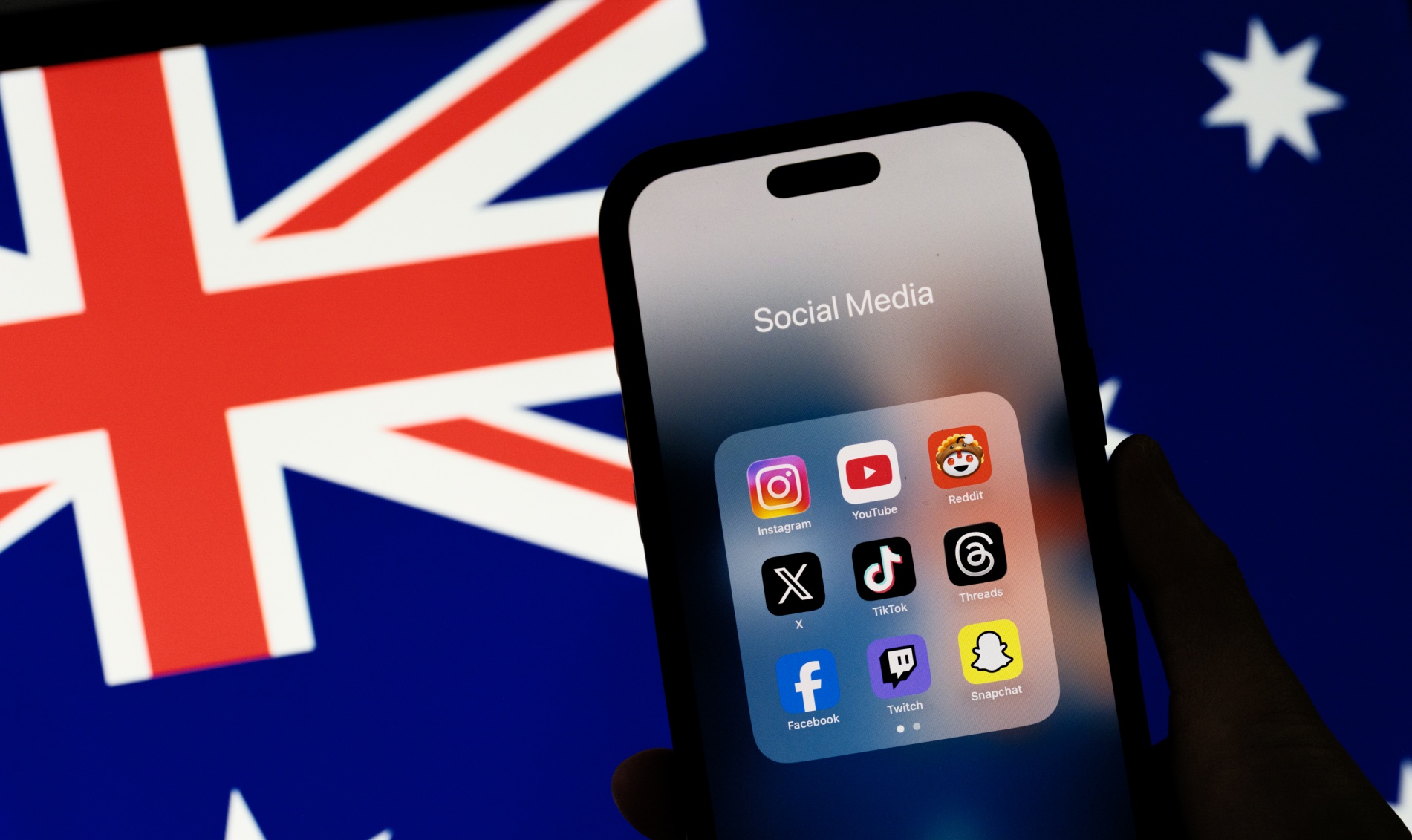
Australia tried to keep kids off social media. Its ban has had the opposite effect.

Nine months after Australia's youth social media ban came into force, usage data shows teen time on the platforms has held steady or edged up. The finding suggests a hard regulatory restriction alone does not shift behaviour when workarounds are trivial. A relevant data point for anyone drafting age-gating policy elsewhere.

tubefilter.com

Twitch and Amazon face a class action over training AI on streamers' content

A Connecticut streamer has filed a class action alleging Twitch fed creator streams and chat data into Amazon's AI model training without consent. The complaint attacks the opt-out mechanism put in place after the programme was announced, arguing that silence was treated as permission. It is the first serious legal test of a platform harvesting creator output as training material. Every creator contract signed from here on needs an explicit AI clause, in both directions.

socialmediatoday.com

New Zealand introduces teen social media restrictions

New Zealand now requires platforms including Instagram and TikTok to verify that users are over 16, following Australia down the same road. Enforcement sits with the platforms rather than with parents, which is what makes it bite. Two markets in one region have now legally redrawn who a brand can reach on social. Age verification has become a market-level compliance constraint, not a platform setting.

digiday.com

AI advertising's measurement problem is really a governance problem

As OpenAI builds out its advertising business, the industry is chasing standardised measurement when the actual gap is governance: who defines the metric, who audits it, and who arbitrates when the platform marks its own homework. The stakes climb as language models become a primary route to information. Standardising a number without naming its owner produces a number nobody trusts. The ask that travels is a named owner, not a target figure.

techcrunch.com

Is it legal to train AI models on copyrighted books? It's complicated

Most published authors have unknowingly had their work used to train AI models, and whether that is legally permissible remains genuinely unsettled across jurisdictions. This matters beyond publishing: any brand or creator putting out long-form content is effectively training data too, and the eventual legal outcome will shape licensing and compensation norms for content broadly. Worth monitoring as case law develops.

socialmediatoday.com

Will Meta be found guilty of driving social media addiction?

A major US lawsuit against Meta opened last week with potential damages reported at up to a trillion dollars, centred on whether platform design deliberately drives compulsive use. The outcome would reach far beyond Meta, since the same design patterns are industry standard. Relevant to anyone whose distribution depends on surfaces whose legal footing is contested.

tubefilter.com

Senators question TikTok over algorithm experiment that withheld safeguards

Bloomberg reporting revealed TikTok withheld content safeguards from around 15 million users held as a control group in an algorithm experiment. Senators are now demanding answers, and the case has become part of a wider legal argument about platform design. A concrete instance of platform risk that sits upstream of anything a brand controls on the same surface.

socialmediatoday.com

YouTube expands its always-on Channels experiment

YouTube has widened access to Channels, labelled Stations in product, which turns a body of content into a 24/7 lean-back stream with live chat so viewers arrive into a shared room instead of picking a video. It began with a Coachella experiment in April 2026 and the August expansion admits only a small number of new musicians, podcasters and media creators. Available globally except Portugal, Switzerland and Turkiye. It is the third TV-shaped format in a month, and each one assumes the content sits in a single deep library.

digiday.com

The new AI playbook: the rules brands are setting around customer-facing content

A survey of how large advertisers including Goodwipes, Hilton and Unilever are codifying where generative AI may touch customer-facing work: heavy use upstream in production and optimisation, tighter constraints the closer output gets to the customer. These are written internal rules rather than public positions, and they are being set before an incident rather than after one. The workable version governs where AI output appears, not whether AI was used, because rules written the other way round cannot be enforced.

techcrunch.com

Senators demand answers from TikTok over experiment that disabled safeguards

US senators are pressing TikTok for details after reports it ran an experiment disabling safety safeguards to measure the effect on user engagement. The episode adds fresh regulatory and reputational risk on top of platform performance risk for anyone running always-on TikTok programs. A reminder to track platform-safety scrutiny alongside reach and engagement metrics.

socialmediatoday.com

LinkedIn says 1M people have reported AI slop

LinkedIn's new report button was used by over a million people in two weeks, and flagged content is seeing roughly 40% fewer views. The target is stated as polished but empty writing rather than AI assistance itself, so refining a post is fine and publishing a generic one is not. What makes it unusual is that the detector is other readers, not a classifier.

techcrunch.com

Tesla, Uber and Waymo all get the OK to operate thousands of robotaxis in Nevada

Nevada has authorised up to 8,000 robotaxis across three operators over the next twelve months. This is a volume permit rather than a pilot, and it lands the same week Waymo opened its cheaper next-generation vehicle to all riders in three cities. The everyday mobility conversation in these cities is increasingly being written by companies that do not build cars.

marketingdive.com

IAB revisits AI disclosure in ads as legal requirements multiply

The IAB published version two of its AI Transparency and Disclosure Framework, responding to new AI-in-advertising rules that have come into force across the EU, parts of Asia, and US states like New York and California since the first version in January. The guidance warns that over-labeling creates disclosure fatigue, and recommends flagging AI only for consumer-facing synthetic content such as AI images or digital twins, not routine editing. A useful reference as more jurisdictions legislate AI disclosure in ads.

marketingdive.com

ANA cautions marketers against overreliance on retail media data

The ANA is warning marketers against leaning too heavily on retail media network data for measurement, citing inconsistent methodologies and walled-garden reporting across retailers. A useful counterweight to retail media's growth hype, and a reminder to independently validate vendor-supplied numbers. Relevant to anyone building cross-channel measurement frameworks that include retail media spend.

tubefilter.com

TikTok agrees generative AI guardrails with the Motion Picture Association

ByteDance has signed a memorandum with the Motion Picture Association committing to safeguards against unauthorised deepfakes on TikTok. It builds on the IP protections already written into the updated generative models used across TikTok and CapCut. Rights holders are now negotiating platform-level guardrails directly rather than waiting for regulation.

tubefilter.com

YouTube now counts a public view from the first frame

YouTube has stopped requiring a watch-time threshold before a public view is registered on long-form video. The count now fires when the video loads, aligning long-form with the way Shorts have always been measured, and the stated aim is to give creators bigger numbers to negotiate brand deals with. Studio keeps the older engaged-view metrics, so the public figure and the internal figure now describe different things. Any view comparison that straddles August 2026 is broken.

Follow this the easy way.

The daily brief covers this topic and the four others, in one email each morning.

One email each morning, around 07:00 CET. Unsubscribe in one click. Your address is never sold, never shared.