Food For Your Brain

Topic

AI

What the models actually change in day to day work, separated from what vendors claim they change.

121 marks · first on 18 August 2026 · latest on 24 August 2026

Often filed alongside

fastcompany.com

AI has young writers between a rock and a hard place

Young writers and junior content creators are getting squeezed from two sides: pressure to use AI tools to keep pace, and false accusations of AI use that damage credibility even when the work is genuinely human-made. The piece surfaces an emerging trust problem likely to spread to any content-heavy discipline, including social and copywriting teams. Worth watching how platforms and clients start verifying authorship.


socialmediatoday.com

X launches MCP server

X has launched an MCP (Model Context Protocol) server, letting advertisers plug AI agents and tools directly into campaign workflows. It is one of the first native MCP integrations from a major ad platform, signalling that AI-agent access to ad tooling is becoming a real distribution channel rather than just a chat interface. Worth tracking as other platforms roll out their own MCP endpoints.

digiday.com

OpenAI is sharpening its focus on enterprise advertisers

OpenAI is recruiting a head of ads enterprise marketing at 374,000 to 415,000 dollars, with the stated ambition of becoming a premium advertising platform for the world's marketers. A hiring signal rather than a product launch, but an unusually explicit one. If assistant answers become a paid surface, arguments about what AI engines cite gain a competitor in placement, and any honest case will have to separate being cited from being bought.

digiday.com

The new AI playbook: the rules brands are setting around customer-facing content

A survey of how large advertisers including Goodwipes, Hilton and Unilever are codifying where generative AI may touch customer-facing work: heavy use upstream in production and optimisation, tighter constraints the closer output gets to the customer. These are written internal rules rather than public positions, and they are being set before an incident rather than after one. The workable version governs where AI output appears, not whether AI was used, because rules written the other way round cannot be enforced.

searchengineland.com

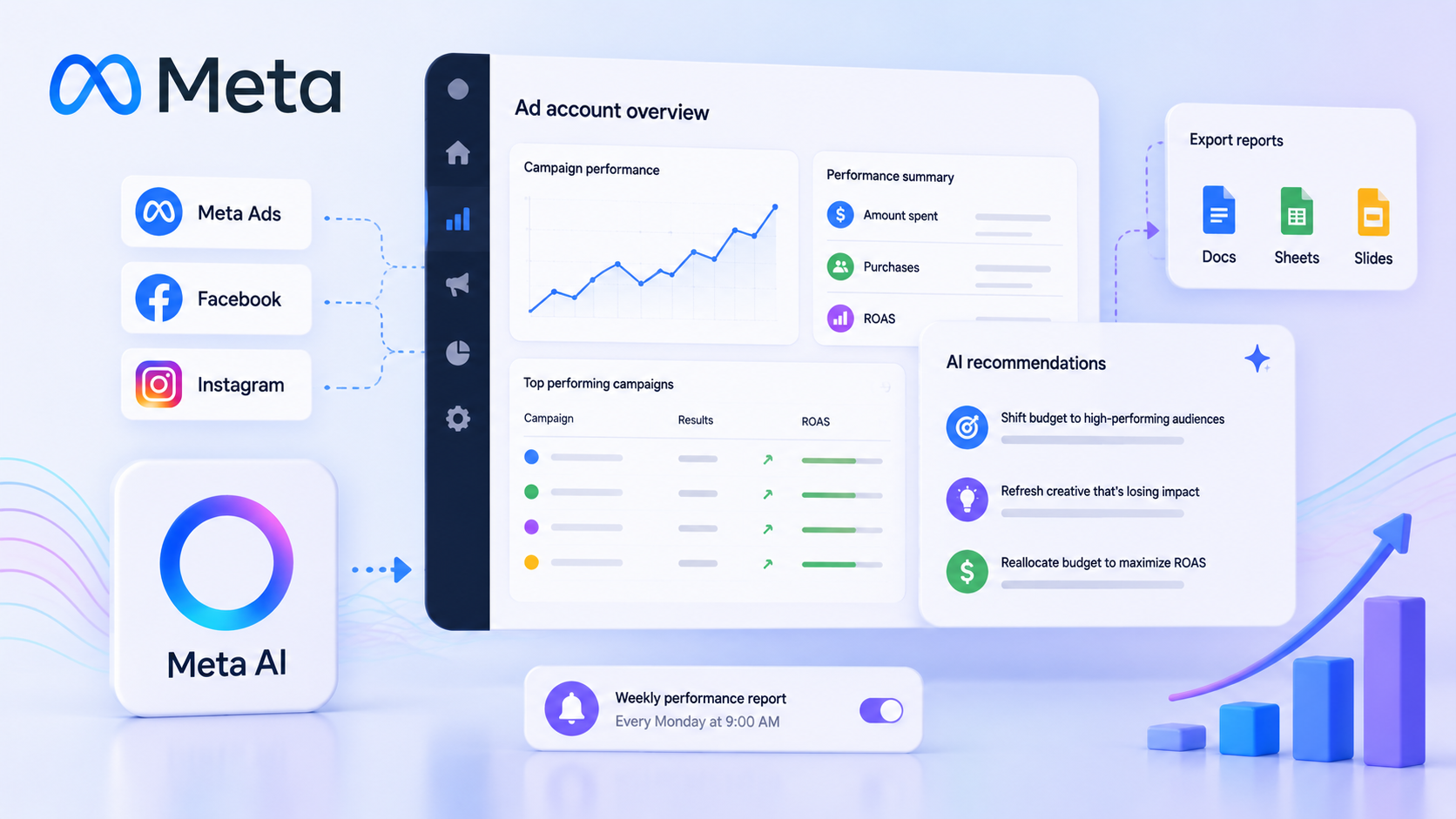
Meta AI can now analyze and optimize Meta Ads campaigns

Meta AI gained the ability to directly analyze Meta Ads campaign performance and recommend or automate optimizations and reporting. This pushes further toward an agentic ad-ops model where the platform's own AI proposes, and potentially executes, optimizations rather than just surfacing dashboards. Media buyers should watch how much decision authority these recommendations quietly absorb.

techcrunch.com

A third of web pages published since ChatGPT's launch show signs of AI authorship, study finds

A new study finds roughly a third of web pages published since ChatGPT's launch show signs of AI authorship or heavy AI editing, complicating any assumption that organic web content is human-written. For GEO and content strategy, this raises the bar on differentiation: generic AI-assisted content is now a baseline, not a point of difference. Worth revisiting how AI-assisted versus AI-generated content gets defined internally.

socialmediatoday.com

LinkedIn says 1M people have reported AI slop

LinkedIn's new report button was used by over a million people in two weeks, and flagged content is seeing roughly 40% fewer views. The target is stated as polished but empty writing rather than AI assistance itself, so refining a post is fine and publishing a generic one is not. What makes it unusual is that the detector is other readers, not a classifier.

marketingdive.com

IAB revisits AI disclosure in ads as legal requirements multiply

The IAB published version two of its AI Transparency and Disclosure Framework, responding to new AI-in-advertising rules that have come into force across the EU, parts of Asia, and US states like New York and California since the first version in January. The guidance warns that over-labeling creates disclosure fatigue, and recommends flagging AI only for consumer-facing synthetic content such as AI images or digital twins, not routine editing. A useful reference as more jurisdictions legislate AI disclosure in ads.

searchengineland.com

JavaScript links can make your pages invisible to AI search

A 41-day controlled experiment found Googlebot reached only 2 percent of JavaScript-linked pages, while GPTBot, ClaudeBot and other AI crawlers found none of the JavaScript-injected navigation links at all. Only Google's crawler stack executes JavaScript, so client-side content injection is invisible to AI retrieval regardless of how a page performs in classic search. Fixing link architecture before launch worked far better than retrofitting afterwards.

searchengineland.com

ChatGPT ads are expanding to 31 European countries

OpenAI begins serving ads across 31 European markets on 24 August, including France, Germany and Spain, built on explicit user consent rather than a legitimate interest claim. The offer covers conversion optimisation, geo-targeting, custom audiences and third party measurement, so it is a full ad product rather than a pilot. The assistant that answers brand questions now also sells placement against those answers.

technologyreview.com

We still don't know how people are really using AI

A research-grounded look at the gap between assumed and actual AI usage patterns, pushing back on some standard narratives brands and platforms lean on to justify AI features. Good grounding piece before taking usage claims from vendors or platforms at face value. Relevant context for anyone benchmarking AI adoption claims against real behavioral data.

socialmediatoday.com

TikTok Live adds AI-generated intros

TikTok now lets creators generate AI-powered self-intros for live broadcasts, lowering the production bar for going live regularly. It's a small feature, but it signals platforms packaging generative AI directly into creator tooling rather than leaving it to third-party apps. Worth tracking as a leading indicator for where AI-assisted production shows up next across short-form platforms.

tubefilter.com

TikTok agrees generative AI guardrails with the Motion Picture Association

ByteDance has signed a memorandum with the Motion Picture Association committing to safeguards against unauthorised deepfakes on TikTok. It builds on the IP protections already written into the updated generative models used across TikTok and CapCut. Rights holders are now negotiating platform-level guardrails directly rather than waiting for regulation.

digiday.com

OpenAI's ads business hits Europe at the six month mark

OpenAI switches on advertising across 31 European markets on 24 August, six months after the US pilot began. The rollout required GDPR work, in particular explicit consent for personalised targeting, so the European product is a consent-gated version of the American one. The surface where people ask questions is becoming a paid channel in Europe, not only an organic one.

techcrunch.com

Anthropic's annualized revenue surges to $65B

Anthropic added $18B in annualized revenue in just two months, underlining how fast enterprise AI spend is scaling right now. That pace matters for anyone budgeting AI tooling or GEO/AI-search investment, since it signals the underlying market is still in a steep growth phase rather than plateauing. A useful data point for internal forecasting conversations about AI-related budget lines.

prnewsonline.com

AI Recycled a Dead Promotion and Sent Customers to a Client's Doors

An AI answer engine resurfaced a long-expired 2025 restaurant promotion, journalists republished it without checking, and customers showed up nationwide expecting a deal that no longer existed. The affected outlets quietly scrubbed the brand's name instead of issuing corrections, leaving the operational and reputational cleanup entirely to the brand. A concrete, real-world case for why GEO and AI-answer monitoring now belongs in crisis-preparedness playbooks, not just SEO reporting.

socialmediatoday.com

ByteDance signs a Motion Picture Association deal on AI-generated content

ByteDance has agreed protections against intellectual property infringement from AI-generated content, addressing film and television producers' concerns about unauthorised use of their work. It is one of the first platform-level commitments of its kind rather than a policy statement. The interesting part will be enforcement at the volume TikTok operates at. Rights holders are now negotiating with the distribution layer, not just the model builders.

techcrunch.com

Higgsfield raises 400 million dollars, quadrupling its valuation in eight months

The AI video generation platform closed a 400 million dollar Series B at a 5.4 billion dollar valuation, up fourfold in eight months. Capital is moving quickly into the tools that sit between a creator and a finished asset. That lowers the cost floor of content production for everyone. The scarce input shifts away from production capability and towards access, judgement and audience trust.

Follow this the easy way.

The daily brief covers this topic and the four others, in one email each morning.

One email each morning, around 07:00 CET. Unsubscribe in one click. Your address is never sold, never shared.